• Twitter
  • Jobs
ProCURE oncology
  • HOME
  • ABOUT US
  • RESEARCH GROUP
    • Molleví’s Lab
    • Antolin’s Lab
    • Alemany’s & Piulats’s lab
    • Martínez-Balibrea’s Lab
    • Aytes’s Lab
    • Belver’s Lab
    • Pujana’s Lab
    • Menendez’s Lab
    • Sureda’s & Farre’s Lab
    • Casanovas’s Lab
    • Viñals’s lab
  • INNOVATION
  • NEWS
  • CONTACT
  • Menu Menu
VIEW ALL RESEARCH-GROUP

Susceptibility, tumor progression and resistance
Pujana’s Lab

DESCRIPTION

Targeting cancer complexity at origin and progression

Our research is focused on better understanding breast cancer initiation and, from acquired knowledge, to assess targeted prevention strategies. In parallel, we study pan-cancer vulnerabilities and the connection to a rare, lung metastatic disease, lymphangioleiomyomatosis (LAM).

Group members

Miquel Angel Pujana

Group leaders

Principal investigator

Francesca Mateo

Researchers

Research assistant

Roderic Espín

Young investigators

PhD student

Lara Ruiz

Young investigators

PhD student

Arzoo Shabbir

Young investigators

PhD student

    Luís Alfaro

    Young investigators

    PhD student

    Publications

    NEK10 tyrosine phosphorylates p53 and controls its transcriptional activity

    21 de June de 2020/in Pujana's Lab/by miguel

    Oncogene. 2020 Jul;39(30):5252-5266. doi: 10.1038/s41388-020-1361-x. Epub 2020 Jun 19. ABSTRACT In response to genotoxic stress, multiple kinase signaling cascades are activated, many of them directed towards the tumor suppressor p53, which coordinates the DNA damage response (DDR). Defects in DDR pathways lead to an accumulation of mutations that can promote tumorigenesis. Emerging evidence implicates multiple […]

    https://procure-oncology.com/wp-content/uploads/2023/10/Procure-icoRecurso-1@2x-100.jpg 0 0 miguel https://procure-oncology.com/wp-content/uploads/2023/10/Procure-icoRecurso-1@2x-100.jpg miguel2020-06-21 10:00:002020-06-21 10:00:00NEK10 tyrosine phosphorylates p53 and controls its transcriptional activity

    Tumors defective in homologous recombination rely on oxidative metabolism: relevance to treatments with PARP inhibitors

    14 de May de 2020/in Pujana's Lab/by miguel

    EMBO Mol Med. 2020 Jun 8;12(6):e11217. doi: 10.15252/emmm.201911217. Epub 2020 May 13. ABSTRACT Mitochondrial metabolism and the generation of reactive oxygen species (ROS) contribute to the acquisition of DNA mutations and genomic instability in cancer. How genomic instability influences the metabolic capacity of cancer cells is nevertheless poorly understood. Here, we show that homologous recombination-defective […]

    https://procure-oncology.com/wp-content/uploads/2023/10/Procure-icoRecurso-1@2x-100.jpg 0 0 miguel https://procure-oncology.com/wp-content/uploads/2023/10/Procure-icoRecurso-1@2x-100.jpg miguel2020-05-14 10:00:002020-05-14 10:00:00Tumors defective in homologous recombination rely on oxidative metabolism: relevance to treatments with PARP inhibitors

    Looking for a Better Characterization of Triple-Negative Breast Cancer by Means of Circulating Tumor Cells

    5 de February de 2020/in Pujana's Lab/by miguel

    J Clin Med. 2020 Jan 27;9(2):353. doi: 10.3390/jcm9020353. ABSTRACT Traditionally, studies to address the characterization of mechanisms promoting tumor aggressiveness and progression have been focused only on primary tumor analyses, which could provide relevant information but have limitations to really characterize the more aggressive tumor population. To overcome these limitations, circulating tumor cells (CTCs) represent […]

    https://procure-oncology.com/wp-content/uploads/2023/10/Procure-icoRecurso-1@2x-100.jpg 0 0 miguel https://procure-oncology.com/wp-content/uploads/2023/10/Procure-icoRecurso-1@2x-100.jpg miguel2020-02-05 11:00:002020-02-05 11:00:00Looking for a Better Characterization of Triple-Negative Breast Cancer by Means of Circulating Tumor Cells

    Fine-mapping of 150 breast cancer risk regions identifies 191 likely target genes

    9 de January de 2020/in Pujana's Lab/by miguel

    Nat Genet. 2020 Jan;52(1):56-73. doi: 10.1038/s41588-019-0537-1. Epub 2020 Jan 7. ABSTRACT Genome-wide association studies have identified breast cancer risk variants in over 150 genomic regions, but the mechanisms underlying risk remain largely unknown. These regions were explored by combining association analysis with in silico genomic feature annotations. We defined 205 independent risk-associated signals with the […]

    https://procure-oncology.com/wp-content/uploads/2023/10/Procure-icoRecurso-1@2x-100.jpg 0 0 miguel https://procure-oncology.com/wp-content/uploads/2023/10/Procure-icoRecurso-1@2x-100.jpg miguel2020-01-09 11:00:002020-01-09 11:00:00Fine-mapping of 150 breast cancer risk regions identifies 191 likely target genes

    Association of Genomic Domains in BRCA1 and BRCA2 with Prostate Cancer Risk and Aggressiveness

    15 de November de 2019/in Pujana's Lab/by miguel

    Cancer Res. 2020 Feb 1;80(3):624-638. doi: 10.1158/0008-5472.CAN-19-1840. Epub 2019 Nov 13. ABSTRACT Pathogenic sequence variants (PSV) in BRCA1 or BRCA2 (BRCA1/2) are associated with increased risk and severity of prostate cancer. We evaluated whether PSVs in BRCA1/2 were associated with risk of overall prostate cancer or high grade (Gleason 8+) prostate cancer using an international […]

    https://procure-oncology.com/wp-content/uploads/2023/10/Procure-icoRecurso-1@2x-100.jpg 0 0 miguel https://procure-oncology.com/wp-content/uploads/2023/10/Procure-icoRecurso-1@2x-100.jpg miguel2019-11-15 11:00:002019-11-15 11:00:00Association of Genomic Domains in BRCA1 and BRCA2 with Prostate Cancer Risk and Aggressiveness
    Page 10 of 23«‹89101112›»

    Research Projects

    The group works and collaborates to decipher the systems mechanisms of cancer development and progression, with the aim of developing more precise preventive and therapeutic approaches. The group combines in silico and wet-lab studies for the purpose of identifying cancer principles and vulnerabilities.

    Collaborations

    CIMBA – Consortium of Investigators of Modifiers of BRCA1/2

    https://cimba.ccge.medschl.cam.ac.uk/

    Lobular Breast Cancer

    https://lobsterpot.eu/

    BRCA1 breast cancer

    Khokha Lab

    https://medbio.utoronto.ca/faculty/khokha

    Hakem Lab

    https://medbio.utoronto.ca/faculty/hakem

    Maxwell Lab

    https://www.bcchr.ca/cmaxwell

    Serra Lab

    https://vhio.net/biosketch-violeta-serra/

    Cancer biology

    Schramek Lab

    https://schramek.lunenfeld.ca/

    Li Lab

    https://lilab.smhs.gwu.edu/

    Barcellos-Hoff Lab

    https://barcelloshofflab.ucsf.edu/principal-investigator

    Cancer genetics

    De Cid Lab – GCAT

    http://www.gcatbiobank.org/

    LAM research

    Johnson Lab – LAM UK

    https://www.nottingham.ac.uk/medicine/people/simon.johnson

    Elżbieta Radzikowska

    National Tuberculosis and Lung Diseases Research Institute, Poland

    Kwiatkowski Lab

    https://www.kwiatkowskilab.org/

    AELAM

    https://www.aelam.org/

    VHIR

    https://vhir.vallhebron.com/en/research/pneumology

    Molina Lab

    https://idibell.cat/en/research/translational-medicine-area/cardiovascular-respiratory-and-systemic-diseases-and-cellular-aging-program/pneumology/

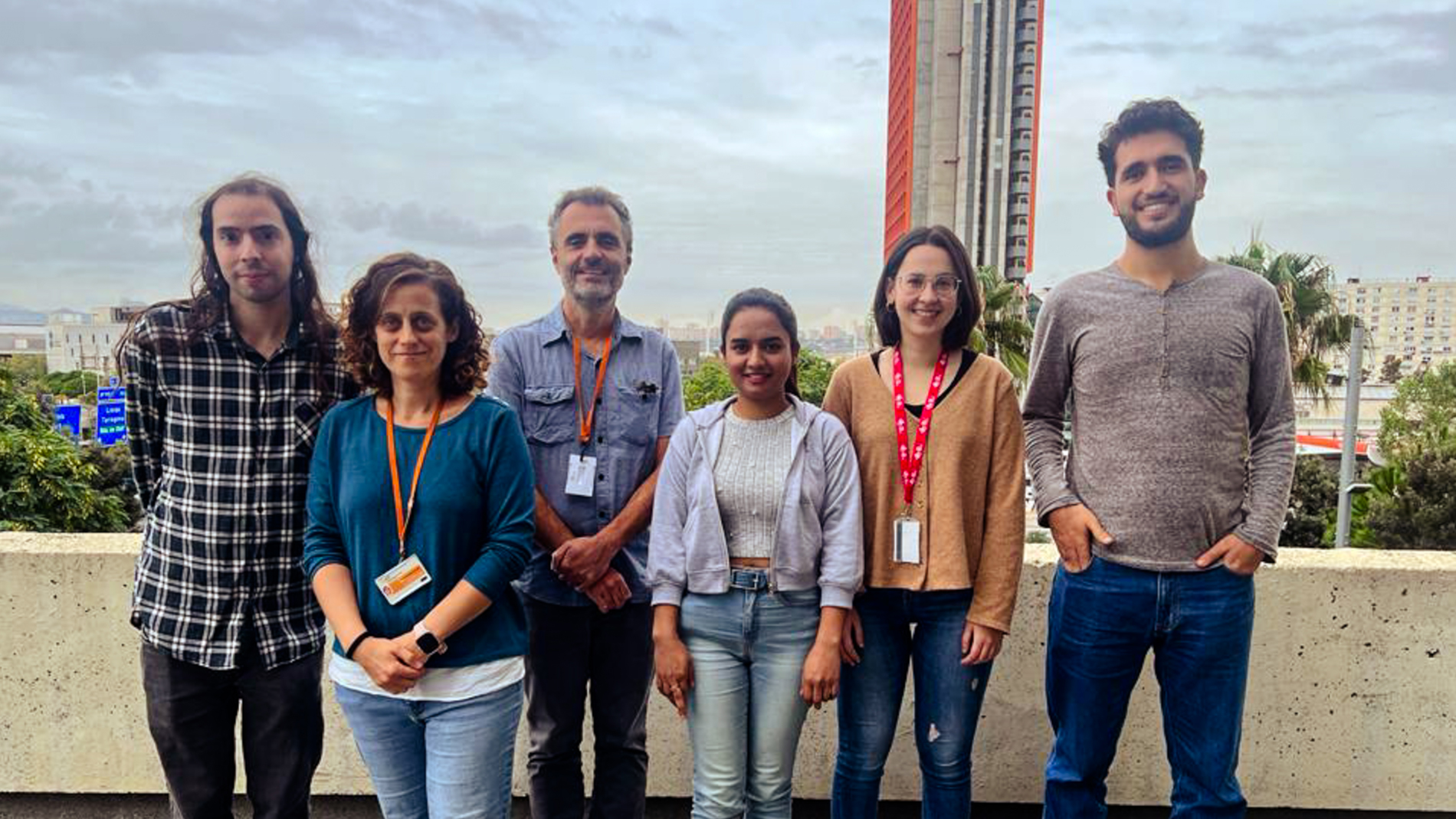
    Research group photo.Pujana's Lab
    Program Against Cancer Therapeutic Resistance

    CONTACT US

    Campus IDIBELL
    (L’Hospitalet del Llobregat)
    Hospital Duran i Reynals, Gran Via 199,
    L’Hospitalet del Llobregat,
    Barcelona 08908
    Tel. +34 93 260 7952

    Campus IGTP-IJC
    (Badalona)
    Campus Can Ruti – IGTP – Building Muntanya,
    Rd. Can Ruti, Camí de les escoles s/n,
    Badalona, Barcelona 08916
    Tel. +34 93 554 3069

    Campus IDIBGI
    (Girona)
    Parc Hospitalari Martí i Julià de Salt, Dr. Castany s/n,
    Salt, Girona 17190
    Tel. +34 872 987 087

    © Copyright - Edisenius
    • Privacy Policy
    • Cookie Policy
    • Legal Notice
    Belver’s LabBelver's LabMenendez's LabMenendez’s Lab
    Scroll to top
    Manage cookie consent
    To offer the best experiences, we use technologies such as cookies to store and/or access device information. Consent to these technologies will allow us to process data such as browsing behavior or unique IDs on this site. Failure to consent, or withdrawal of consent, may adversely affect certain features and functions.
    Functional Always active
    Storage or technical access is strictly necessary for the legitimate purpose of allowing the use of a specific service explicitly requested by the subscriber or user, or for the sole purpose of carrying out the transmission of a communication over an electronic communications network.
    Preferences
    The technical storage or access is necessary for the legitimate purpose of storing preferences that are not requested by the subscriber or user.
    Statistics
    The technical storage or access that is used exclusively for statistical purposes. Storage or technical access that is used exclusively for anonymous statistical purposes. Without a requirement, voluntary compliance by your Internet service provider, or additional records from a third party, information stored or retrieved solely for this purpose cannot be used to identify you.
    Marketing
    Storage or technical access is necessary to create user profiles to send advertising, or to track the user on a website or several websites for similar marketing purposes.
    Manage options Manage services Manage {vendor_count} vendors Read more about these purposes
    See preferences
    {title} {title} {title}