Editorial: Cellular immunotherapy: transforming cancer treatment
Front Immunol. 2025 Oct 29;16:1724025. doi: 10.3389/fimmu.2025.1724025. eCollection 2025. NO ABSTRACT PMID:41235260 | PMC:PMC12605324 | DOI:10.3389/fimmu.2025.1724025

Our research is focused on the study of the molecular mechanisms driving leukemia and lymphoma generation, and on the identification of new therapeutic targets that can potentially translate into novel strategies for the treatment of these diseases.
The Leukemia and Immuno-Oncology group focuses its work on two main research lines. On the one hand, the group studies the molecular mechanisms driving oncogenic transformation and progression in Juvenile Myelomonocytic Leukemia (JMML) with the aim of identifying therapeutic targets that can potentially translate into new treatments for these patients. On the other hand, our team is also interested in studying the impact of human papillomavirus (HPV) infection in the development of B-cell lymphoma.
Molecular pathways and targeted therapies in JMML
Juvenile myelomonocytic leukemia (JMML) is an aggressive myeloproliferative neoplasm of early childhood for which hematopoietic stem cell transplantation (HSCT) is currently the only curative treatment. One out of three children diagnosed with JMML succumb to disease. And these numbers are even more dramatic for those patients carrying activating mutations in the PTPN11 gene, which present the most aggressive forms of the disease with a survival rate of only 25%.
JMML presents a low mutational burden in the coding genome, with five canonical mutations in RAS pathway genes (PTPN11, KRAS, NRAS, CBL and NF1) that act as drivers in more than 90% of the patients and only a few described secondary mutations. However, this apparently simple genetic landscape is accompanied by a high phenotypical variability within the patients, which cannot be explained by our current knowledge. Thus, JMML is still an important clinical challenge due to its heterogeneity, difficult diagnosis, poor prognosis, and the lack of alternative treatment options other than HSCT.
To shed light on these questions, our group has set two main goals:
Role of HPV in B-cell lymphoma pathogenesis
HPV infections are the most common sexually transmitted diseases, affecting approximately 80% of all men and women during their lifetime. Interestingly, HPV has been associated to an increased B-cell lymphoma incidence. Moreover, some studies have shown evidence of HPV infection in B-cell lymphoma cells, suggesting that HPV-driven oncogenic effects might directly contribute to B-cell transformation. However, the specific role of HPV in lymphomagenesis remains unknown. The aim of this project is to shed light on the mechanisms underlying the association between HPV and B-cell lymphoma.
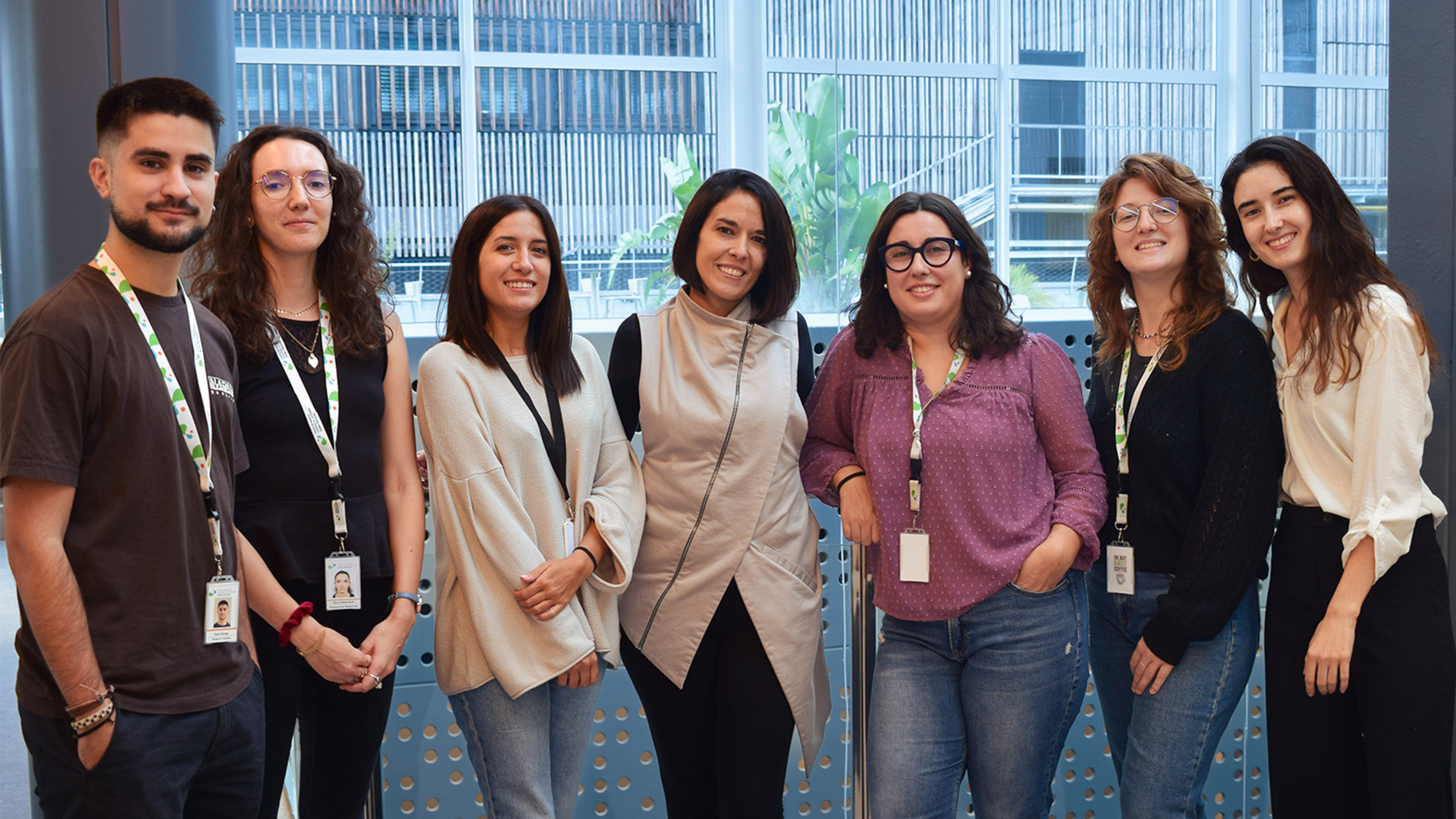
Group members
Group Leader
Lab manager
PhD student
Postdoctoral fellow
PhD student
PhD student
Research assistant
Publications
Front Immunol. 2025 Oct 29;16:1724025. doi: 10.3389/fimmu.2025.1724025. eCollection 2025. NO ABSTRACT PMID:41235260 | PMC:PMC12605324 | DOI:10.3389/fimmu.2025.1724025
Cell Death Dis. 2025 Jul 17;16(1):531. doi: 10.1038/s41419-025-07861-0. ABSTRACT Myelodysplastic syndromes (MDS) are heterogeneous hematopoietic stem cell disorders defined by ineffective hematopoiesis, multilineage dysplasia, and risk of progression to acute myeloid leukemia. Improvements have been made to identify recurrent genetic mutations and their functional roles, but translating this into preclinical models is still difficult. Traditional […]
Haematologica. 2024 Sep 26. doi: 10.3324/haematol.2024.285966. Online ahead of print. ABSTRACT Not available. PMID:39323408 | DOI:10.3324/haematol.2024.285966
Methods Mol Biol. 2024;2773:9-24. doi: 10.1007/978-1-0716-3714-2_2. ABSTRACT T-cell acute lymphoblastic leukemia (T-ALL) is primarily a NOTCH1-driven disease, which represents approximately 15% of pediatric and 25% of adult newly diagnosed ALL cases. Gain-of-function NOTCH1 mutations are highly prevalent in T-ALL contributing to almost 60% of the cases. The protocol presented here describes a method for in […]
Cancers (Basel). 2022 Mar 4;14(5):1335. doi: 10.3390/cancers14051335. ABSTRACT Juvenile myelomonocytic leukemia (JMML) is a rare myelodysplastic/myeloproliferative neoplasm of early childhood. Most of JMML patients experience an aggressive clinical course of the disease and require hematopoietic stem cell transplantation, which is currently the only curative treatment. JMML is characterized by RAS signaling hyperactivation, which is mainly […]
Research Projects
Title: Design of cell therapies based on DNA mimetic peptides for the treatment of patients with Systemic Lupus Erythematosus
Project Number: N/A
PI: Laura Belver
Source of Support: Merck Salud Foundation and FEDER Foundation
Project Start and End Date: 07/2023 – 06/2026
Total Award Amount: 30,000€
Title: Development of new cell therapies for the treatment of patients with Systemic Lupus Erythematosus patients
Project Number: N/A
PI: Laura Belver
Source of Support: FEDER Foundation
Project Start and End Date: 01/2023 – 06/2024
Total Award Amount: 25,000€
Title: Genetics and molecular mechanisms in hematologic malignancies
Project Number: RYC2020-029400-I
PI: Laura Belver
Source of Support: Ramón y Cajal Program – Spanish Ministry of Science and Innovation
Project Start and End Date: 01/2022 – 12/2026
Total Award Amount: 219,250€
Title: Functional impact of enhancer-associated non-coding mutations in Juvenile Myelomonocytic Leukemia
Project Number: PID2020-117645RB-I00
PI: Laura Belver
Source of Support: Spanish Ministry of Science and Innovation
Project Start and End Date: 09/2021 – 08/2024
Total Award Amount: 205,700€
Title: Molecular pathways and targeted therapies in Juvenile Myelomonocytic Leukemia
Project Number: BFero2020.03
PI: Laura Belver
Source of Support: FERO Foundation
Project Start and End Date: 12/2020 – 11/2023
Total Award Amount: 80,000€
Collaborations
Dominique Bonnet (Crick Institute, London)
Kevin Rouault-Pierre (Barts Centre, London)
Hélène Cavé (Hôpital Robert Debré, Paris)
Anna Sureda (Catalan Institute of Oncology, Barcelona)
Laia Alemany (Catalan Institute of Oncology, Barcelona)
Albert Català (Sant Joan de Dèu Hospital, Barcelona)
Antonio Pérez-Martínez (La Paz Hospital, Madrid)
Ana Galera (Virgen de Arrixaca Hospital, Murcia)
Ginés Luengo (Santa Lucía General University Hospital, Cartagena)

Campus IDIBELL
(L’Hospitalet del Llobregat)
Hospital Duran i Reynals, Gran Via 199,
L’Hospitalet del Llobregat,
Barcelona 08908
Tel. +34 93 260 7952
Campus IGTP-IJC
(Badalona)
Campus Can Ruti – IGTP – Building Muntanya,
Rd. Can Ruti, Camí de les escoles s/n,
Badalona, Barcelona 08916
Tel. +34 93 554 3069
Campus IDIBGI
(Girona)
Parc Hospitalari Martí i Julià de Salt, Dr. Castany s/n,
Salt, Girona 17190
Tel. +34 872 987 087

 Pujana’s Lab