Program Against Cancer Therapeutic Resistance

Program Against Cancer Therapeutic Resistance
ProCURE is a research program of the Catalan Institute of Oncology (ICO) and its associated CERCA Institutes, the Bellvitge Biomedical Research Institute (IDIBELL), The Germans Trias i Pujol Research Institute (IGTP-IJC) and the Girona Biomedical Research Institute (IDIBGI), aimed at addressing a major clinical problem in oncology; the existence or emergence of therapeutic resistance. As public service, our commitment is to reduce the impact of cancer on health care.
Resistance to therapy is the most common cause of failure of cancer cure and affects, to a different extent, all types of tumors and therapies. This fundamental clinical problem impairs the cure of up to 70-80% of the cases of relatively frequent cancer types appearing in the general population. As part of the public health system, the ICO and ProCURE commitment is to reduce the health impact of cancer and, thus, to connect professional and technological efforts to enhance our understanding of “why” there is no therapeutic benefit in some patients. In this scenario, ProCURE aims to identify and translate useful and precise biomarkers, and beneficial therapeutic strategies against cancer resistance.
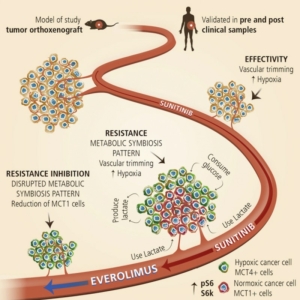
To comprehensively and successfully address the problem of resistance, multidisciplinary teams are needed. Thus, ProCURE is constituted by eleven research groups within a comprehensive cancer center (ICO) that represents a reference in the country. ProCURE studies all major types of cancer and their therapies, as well as less common neoplasms that, due to their clinical impact, urgently need beneficial therapeutic options. Research projects include targeted and chemotherapy resistances, and novel approaches based on immunotherapy, perturbations of metabolism and the tumor microenvironment.
Our research is focused on patients, from diagnosis to treatment and/or progression.
We transfer our novel results to improve clinical care and quality of life, and support wealth creation for the benefit of society as a whole.
Our cancer research is carried out in complementary multi-disciplinary teams, addressing various types of cancer and employing a variety of experimental approaches.
Our research groups address the problem of therapeutic resistance in cancer from various perspectives and nuances, in solid and hematological tumors, studying the molecular mechanisms that lead to resistance, using complex experimental models as well as therapeutic interventions to overcome it.
You will join a community of outstanding researchers and excellent professionals dedicated to fight cancer therapeutic resistance from a translational perspective, close to the patient to generate new knowledge that benefits them. We adhere to equal opportunities regardless of your gender, nationality, race or belief.
Join us, we are interested in your dedication, commitment and excellence.
Contact ProCURE – Campus IDIBELL
Hospital Duran i Reynals, Gran Via 199,
L’Hospitalet del Llobregat, Barcelona 08908
Tel: +34 93 260 7952
Contact ProCURE – Campus IGTP-IJC
Campus Can Ruti – IGTP – Building Muntanya,
Rd. Can Ruti, Camí de les escoles s/n,
Badalona, Barcelona 08916
Tel: +34 93 554 3069
Contact ProCURE – Campus IDIBGI
Parc Hospitalari Martí i Julià de Salt,
Dr. Castany s/n, Salt, Girona 17190
Tel: +34 872 987 087

Campus IDIBELL
(L’Hospitalet del Llobregat)
Hospital Duran i Reynals, Gran Via 199,
L’Hospitalet del Llobregat,
Barcelona 08908
Tel. +34 93 260 7952
Campus IGTP-IJC
(Badalona)
Campus Can Ruti – IGTP – Building Muntanya,
Rd. Can Ruti, Camí de les escoles s/n,
Badalona, Barcelona 08916
Tel. +34 93 554 3069
Campus IDIBGI
(Girona)
Parc Hospitalari Martí i Julià de Salt, Dr. Castany s/n,
Salt, Girona 17190
Tel. +34 872 987 087