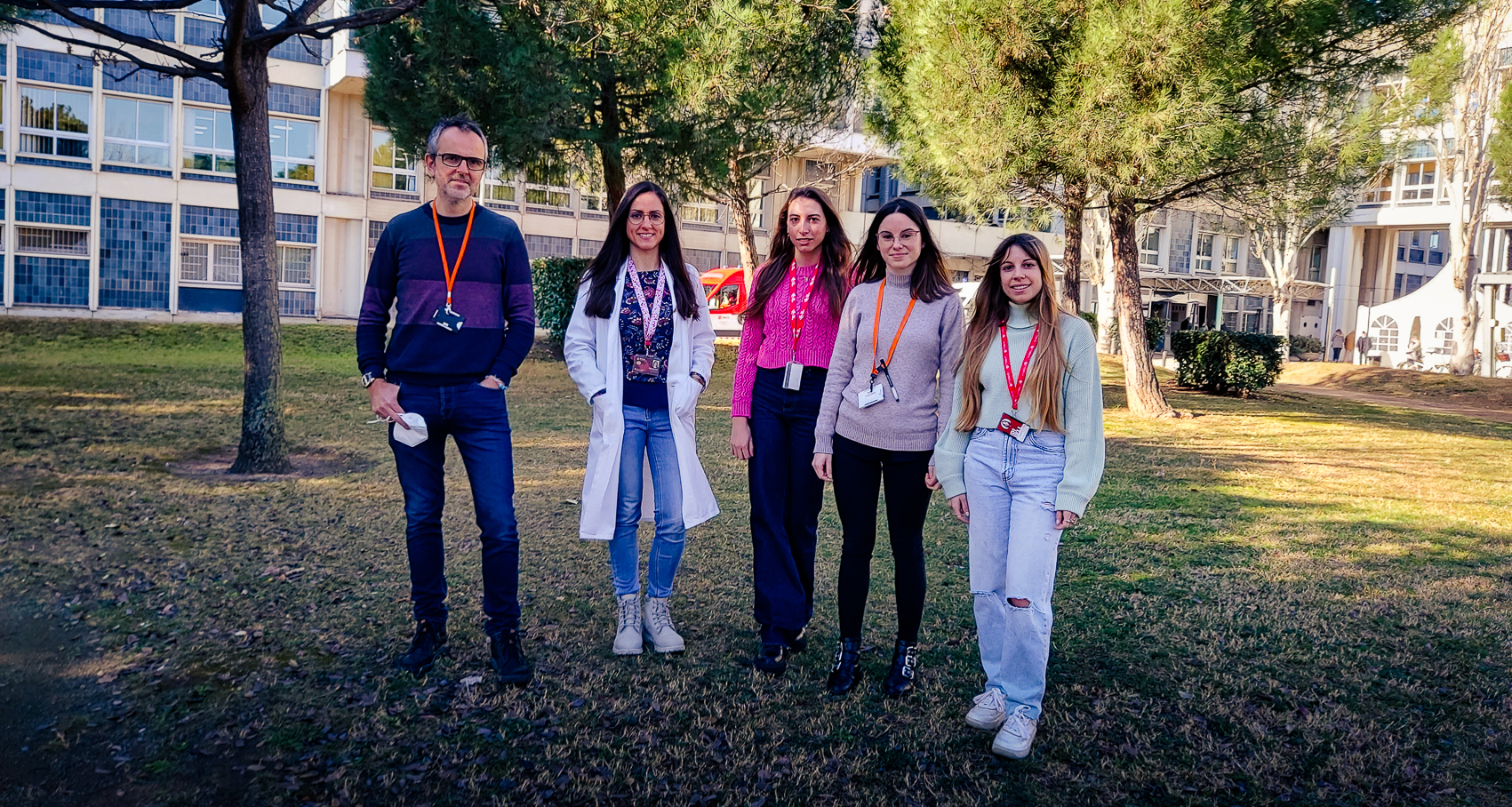
The research group studies the influence of the microenvironment on carcinogenesis in highly desmoplastic tumors, mainly liver metastases from colorectal cancer, since in these tumors cells from the microenvironment play a decisive role in the formation of the characteristic histological growth patterns (HGP) of these malignant lesions, and consequently, in the prognosis of the disease. In addition, the acquisition of resistant phenotypes has also been associated with a particular HGP.
What is desmoplasia? Desmoplasia is a histological feature characterized by an increase in the production of specific collagens, fibronectin, glycosaminoglycans, proteoglycans and other components of the extracellular matrix, as well as a deregulated increase in the number of mesenchymal cells, especially carcinoma-associated fibroblasts (CAFs). In hepatic malignancies, CAFs can come from different cell types, e.g. portal fibroblasts, hepatic stellate cells, vascular smooth muscle cells, pericytes, among others. Likewise, the contribution of each of them to the tumor stroma is variable depending on the type of malignant neoplasm, and interestingly, depending on the place of establishment of the tumor niche, particularly in liver metastases. Furthermore, each of these cell types will maintain a transcriptional program specific to its origin, a fact that leads to an increase in the functional heterogeneity of these cells. This is decisive if we consider CAFs as potential therapeutic targets. Therefore, it is necessary to clearly distinguish those CAFs with pro-tumor properties from those that act in favor of the host, called restrictive or anti-tumor CAFs. And this is a long path still to be walked.
Therefore, the main research interests of the group are:
- To decipher the contribution and function of the different CAF precursors in liver malignancies and particularly on the different types of HGP in liver metastases.
- Reprogramming specific CAFs as therapeutic strategy in desmoplastic tumors
- Discovery of stromal biomarkers for response prediction to neoadjuvant treatment in hepatic metastases from colorectal carcinoma.
- Predicting the histologic growth pattern of liver metastases.