• Twitter
  • Jobs
ProCURE oncology
  • HOME
  • ABOUT US
  • RESEARCH GROUP
    • Molleví’s Lab
    • Antolin’s Lab
    • Alemany’s & Piulats’s lab
    • Martínez-Balibrea’s Lab
    • Aytes’s Lab
    • Belver’s Lab
    • Pujana’s Lab
    • Menendez’s Lab
    • Sureda’s & Farre’s Lab
    • Casanovas’s Lab
    • Viñals’s lab
  • INNOVATION
  • NEWS
  • CONTACT
  • Menu Menu
VIEW ALL RESEARCH-GROUP

Prostate cancer resistance
Aytes’s Lab

DESCRIPTION

Dr. Aytes´s laboratory aims at uncovering new mechanisms driving prostate cancer progression and therapeutic resistance. We utilize genetically-engineered mice to recapitulate the progression pathways observed in patients.

At The Aytes Lab we aim at identifying mechanisms of cancer progression and therapy resistance by developing a unique series of genetically-engineered mice (GEM) models, which are a key resource for the research lines currently undergoing in my group at IDIBELL. 

A strong research focus since the inception of my group in 2016 has been to understand how changes in the transcriptional networks of cancer cells determine the cell identity and impinge on treatment response. To this end, we initially defined the regulatory networks of metastatic and non-metastatic CRPC and identified a set of epigenetic chromatin remodelers, including Nsd2, strongly associated metastatic progression and survival. This study was the groundwork upon which we build an extensive program to identify epigenetic targets and vulnerabilities to be translated to preclinical stages. 

In parallel, our group has a strong interest in identifying resistance mechanisms to standard of care treatments in prostate cancer, mainly antiandrogens. Mutations in the Androgen Receptor (AR) are known to affect the molecular structure and are the most frequent alteration in prostate cancer. Yet, the structure-function relationship and how disease associated mutations affect the AR function in cancer is unclear. We have recently characterized some of these AR mutations and showed how they define the response to antiandrogenic treatmetns. 

At the crossroads of targeted therapies and conventional chemotherapy lies the use of PARP inhibitors. We are trying to understand the genomic determinants of response to PARP inhibition to expand the therapeutic landscape beyond DNA damage repair deficiency. This is particularly relevant for prostate cancer to expand PARP inhibitors beyond classical synthetic lethality involving HR mutant carriers.

The above-mentioned fundamental and translational research endeavors have been instrumental in consolidating the interdisciplinary Prostate Cancer research Group at IDIBELL, Hospital de Bellvitge (HUB), the Catalan Institute of Oncology (ICO) and University of Barcelona (UB). 

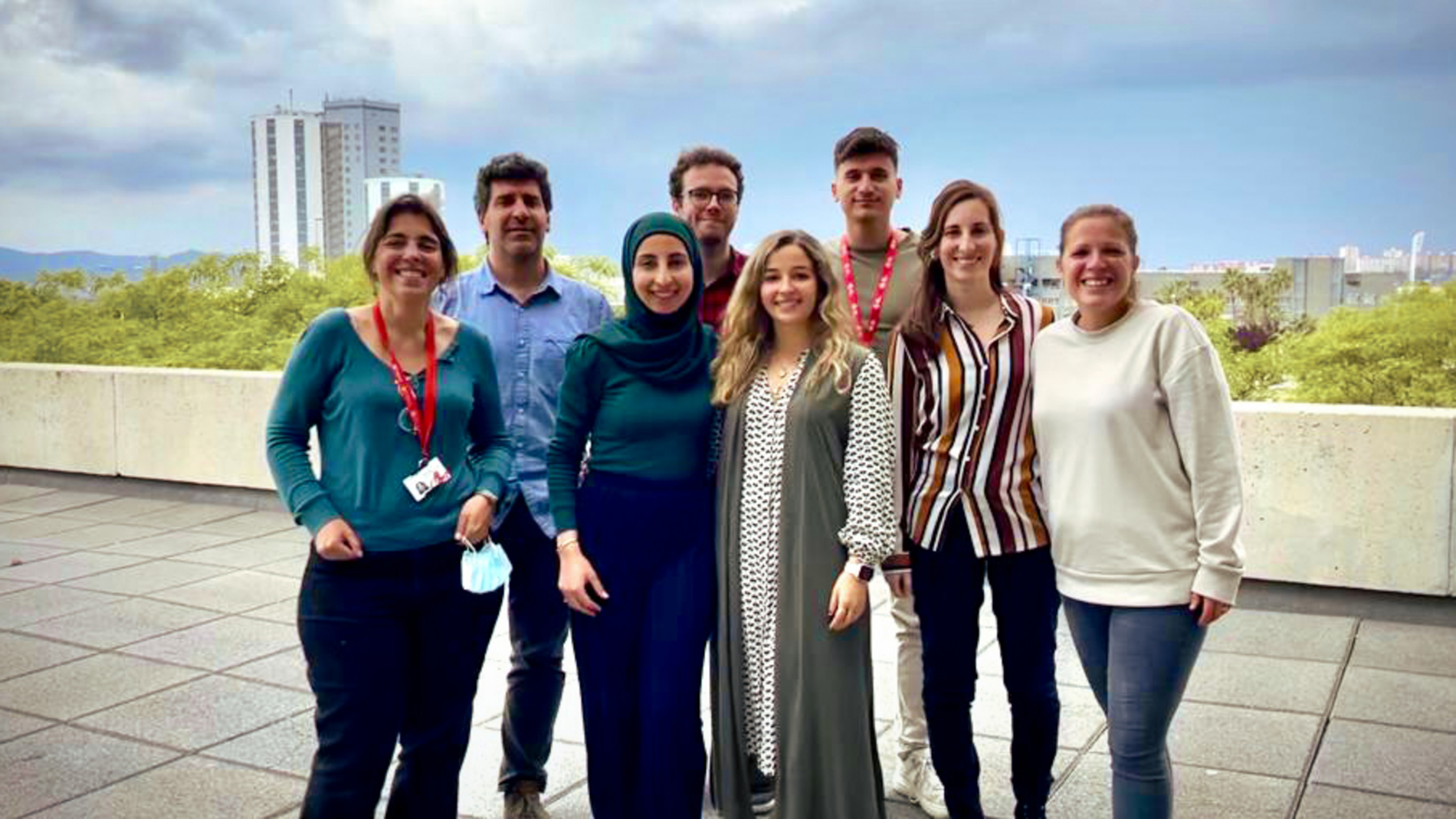
Group members

Alvaro Aytes

Group leaders

Group Leader

Ana Sofia Semiao Correaia de Rocha

Researchers

Research Associate

Rana El Bizri

Researchers

Postdoc

Lidia Franco Luzon

Researchers

Postdoc

Adrian Martinez Tebar

Researchers

Postdoc

Javier Sigüenza Andrade

Researchers

PhD candidate

Pilar Salamanca Jimenez

Researchers

PhD candidate

Nadia Garcia Lozano

Support staff

Research technician

Publications

Recent Advances in Understanding the Biology of Castration-Resistant Prostate Cancer

15 de April de 2026/in Aytes's Lab/by

Urol Clin North Am. 2026 May;53(2):303-315. doi: 10.1016/j.ucl.2026.02.012. Epub 2026 Mar 12. ABSTRACT Prostate cancer progression is largely driven by androgen receptor signaling. While androgen deprivation therapy remains a cornerstone of treatment, it imposes a selective pressure that ultimately leads to the emergence of a castration-resistant phenotype, driven by a range of adaptive molecular mechanisms. […]

https://procure-oncology.com/wp-content/uploads/2023/10/Procure-icoRecurso-1@2x-100.jpg 0 0 https://procure-oncology.com/wp-content/uploads/2023/10/Procure-icoRecurso-1@2x-100.jpg 2026-04-15 10:00:002026-04-15 10:00:00Recent Advances in Understanding the Biology of Castration-Resistant Prostate Cancer

A rise in double-strand breaks sensitizes tumors to oxidative metabolism inhibitors

11 de March de 2026/in Aytes's Lab/by

Biomed Pharmacother. 2026 Mar 10;197:119184. doi: 10.1016/j.biopha.2026.119184. Online ahead of print. ABSTRACT Double-strand breaks (DSBs) accumulate in tumoral DNA due to deficiencies in homologous recombination (HR) repair, such as mutations in BRCA genes, or following antitumoral treatments. In the present study, we show that DSB accumulation, irrespective of origin, triggers an adaptive shift toward oxidative […]

https://procure-oncology.com/wp-content/uploads/2023/10/Procure-icoRecurso-1@2x-100.jpg 0 0 https://procure-oncology.com/wp-content/uploads/2023/10/Procure-icoRecurso-1@2x-100.jpg 2026-03-11 10:00:002026-03-11 10:00:00A rise in double-strand breaks sensitizes tumors to oxidative metabolism inhibitors

Harnessing transcriptional regulation of alternative end-joining to predict cancer treatment

10 de March de 2025/in Aytes's Lab/by

NAR Cancer. 2025 Mar 7;7(1):zcaf007. doi: 10.1093/narcan/zcaf007. eCollection 2025 Mar. ABSTRACT Alternative end-joining (alt-EJ) is an error-prone DNA repair pathway that cancer cells deficient in homologous recombination rely on, making them vulnerable to synthetic lethality via inhibition of poly(ADP-ribose) polymerase (PARP). Targeting alt-EJ effector DNA polymerase theta (POLθ), which synergizes with PARP inhibitors and can […]

https://procure-oncology.com/wp-content/uploads/2023/10/Procure-icoRecurso-1@2x-100.jpg 0 0 https://procure-oncology.com/wp-content/uploads/2023/10/Procure-icoRecurso-1@2x-100.jpg 2025-03-10 10:00:002025-03-10 10:00:00Harnessing transcriptional regulation of alternative end-joining to predict cancer treatment

Identification of differential biological activity and synergy between the PARP inhibitor rucaparib and its major metabolite

9 de February de 2024/in Aytes's Lab/by

Cell Chem Biol. 2024 Feb 6:S2451-9456(24)00043-6. doi: 10.1016/j.chembiol.2024.01.007. Online ahead of print. ABSTRACT The (poly)pharmacology of drug metabolites is seldom comprehensively characterized in drug discovery. However, some drug metabolites can reach high plasma concentrations and display in vivo activity. Here, we use computational and experimental methods to comprehensively characterize the kinase polypharmacology of M324, the […]

https://procure-oncology.com/wp-content/uploads/2023/10/Procure-icoRecurso-1@2x-100.jpg 0 0 https://procure-oncology.com/wp-content/uploads/2023/10/Procure-icoRecurso-1@2x-100.jpg 2024-02-09 11:00:002024-02-09 11:00:00Identification of differential biological activity and synergy between the PARP inhibitor rucaparib and its major metabolite

Editor’s Note: Dual Targeting of the Akt/mTOR Signaling Pathway Inhibits Castration-Resistant Prostate Cancer in a Genetically Engineered Mouse Model

4 de April de 2023/in Aytes's Lab/by miguel

Cancer Res. 2023 Apr 4;83(7):1160. doi: 10.1158/0008-5472.CAN-23-0516. NO ABSTRACT PMID:37014043 | DOI:10.1158/0008-5472.CAN-23-0516

https://procure-oncology.com/wp-content/uploads/2023/10/Procure-icoRecurso-1@2x-100.jpg 0 0 miguel https://procure-oncology.com/wp-content/uploads/2023/10/Procure-icoRecurso-1@2x-100.jpg miguel2023-04-04 10:00:002023-04-04 10:00:00Editor’s Note: Dual Targeting of the Akt/mTOR Signaling Pathway Inhibits Castration-Resistant Prostate Cancer in a Genetically Engineered Mouse Model
Page 1 of 512345
Research group photo. Aytes's Lab
Program Against Cancer Therapeutic Resistance

CONTACT US

Campus IDIBELL
(L’Hospitalet del Llobregat)
Hospital Duran i Reynals, Gran Via 199,
L’Hospitalet del Llobregat,
Barcelona 08908
Tel. +34 93 260 7952

Campus IGTP-IJC
(Badalona)
Campus Can Ruti – IGTP – Building Muntanya,
Rd. Can Ruti, Camí de les escoles s/n,
Badalona, Barcelona 08916
Tel. +34 93 554 3069

Campus IDIBGI
(Girona)
Parc Hospitalari Martí i Julià de Salt, Dr. Castany s/n,
Salt, Girona 17190
Tel. +34 872 987 087

© Copyright - Edisenius
  • Privacy Policy
  • Cookie Policy
  • Legal Notice
Martínez-Balibrea’s LabMartínez-Balibrea's LabBelver's LabBelver’s Lab
Scroll to top
Manage cookie consent
To offer the best experiences, we use technologies such as cookies to store and/or access device information. Consent to these technologies will allow us to process data such as browsing behavior or unique IDs on this site. Failure to consent, or withdrawal of consent, may adversely affect certain features and functions.
Functional Always active
Storage or technical access is strictly necessary for the legitimate purpose of allowing the use of a specific service explicitly requested by the subscriber or user, or for the sole purpose of carrying out the transmission of a communication over an electronic communications network.
Preferences
The technical storage or access is necessary for the legitimate purpose of storing preferences that are not requested by the subscriber or user.
Statistics
The technical storage or access that is used exclusively for statistical purposes. Storage or technical access that is used exclusively for anonymous statistical purposes. Without a requirement, voluntary compliance by your Internet service provider, or additional records from a third party, information stored or retrieved solely for this purpose cannot be used to identify you.
Marketing
Storage or technical access is necessary to create user profiles to send advertising, or to track the user on a website or several websites for similar marketing purposes.
Manage options Manage services Manage {vendor_count} vendors Read more about these purposes
See preferences
{title} {title} {title}