• Twitter
  • Jobs
ProCURE oncology
  • HOME
  • ABOUT US
  • RESEARCH GROUP
    • Molleví’s Lab
    • Antolin’s Lab
    • Alemany’s & Piulats’s lab
    • Martínez-Balibrea’s Lab
    • Aytes’s Lab
    • Belver’s Lab
    • Pujana’s Lab
    • Menendez’s Lab
    • Sureda’s & Farre’s Lab
    • Casanovas’s Lab
    • Viñals’s lab
  • INNOVATION
  • NEWS
  • CONTACT
  • Menu Menu
VIEW ALL RESEARCH-GROUP

Tumor microenvironment and resistance
Molleví’s Lab

DESCRIPTION

The research group studies the influence of microenvironment, and particularly carcinoma-associated fibroblasts (CAFs) on tumorigenesis and therapy resistance in highly desmoplastic tumors, mainly colorectal hepatic metastases.

The research group studies the influence of the microenvironment on carcinogenesis in highly desmoplastic tumors, mainly liver metastases from colorectal cancer, since in these tumors cells from the microenvironment play a decisive role in the formation of the characteristic histological growth patterns (HGP) of these malignant lesions, and consequently, in the prognosis of the disease. In addition, the acquisition of resistant phenotypes has also been associated with a particular HGP.

What is desmoplasia? Desmoplasia is a histological feature characterized by an increase in the production of specific collagens, fibronectin, glycosaminoglycans, proteoglycans and other components of the extracellular matrix, as well as a deregulated increase in the number of mesenchymal cells, especially carcinoma-associated fibroblasts (CAFs). In hepatic malignancies, CAFs can come from different cell types, e.g. portal fibroblasts, hepatic stellate cells, vascular smooth muscle cells, pericytes, among others. Likewise, the contribution of each of them to the tumor stroma is variable depending on the type of malignant neoplasm, and interestingly, depending on the place of establishment of the tumor niche, particularly in liver metastases. Furthermore, each of these cell types will maintain a transcriptional program specific to its origin, a fact that leads to an increase in the functional heterogeneity of these cells. This is decisive if we consider CAFs as potential therapeutic targets. Therefore, it is necessary to clearly distinguish those CAFs with pro-tumor properties from those that act in favor of the host, called restrictive or anti-tumor CAFs. And this is a long path still to be walked.

Therefore, the main research interests of the group are:

  • To decipher the contribution and function of the different CAF precursors in liver malignancies and particularly on the different types of HGP in liver metastases.
  • Reprogramming specific CAFs as therapeutic strategy in desmoplastic tumors 
  • Discovery of stromal biomarkers for response prediction to neoadjuvant treatment in hepatic metastases from colorectal carcinoma.
  • Predicting the histologic growth pattern of liver metastases.

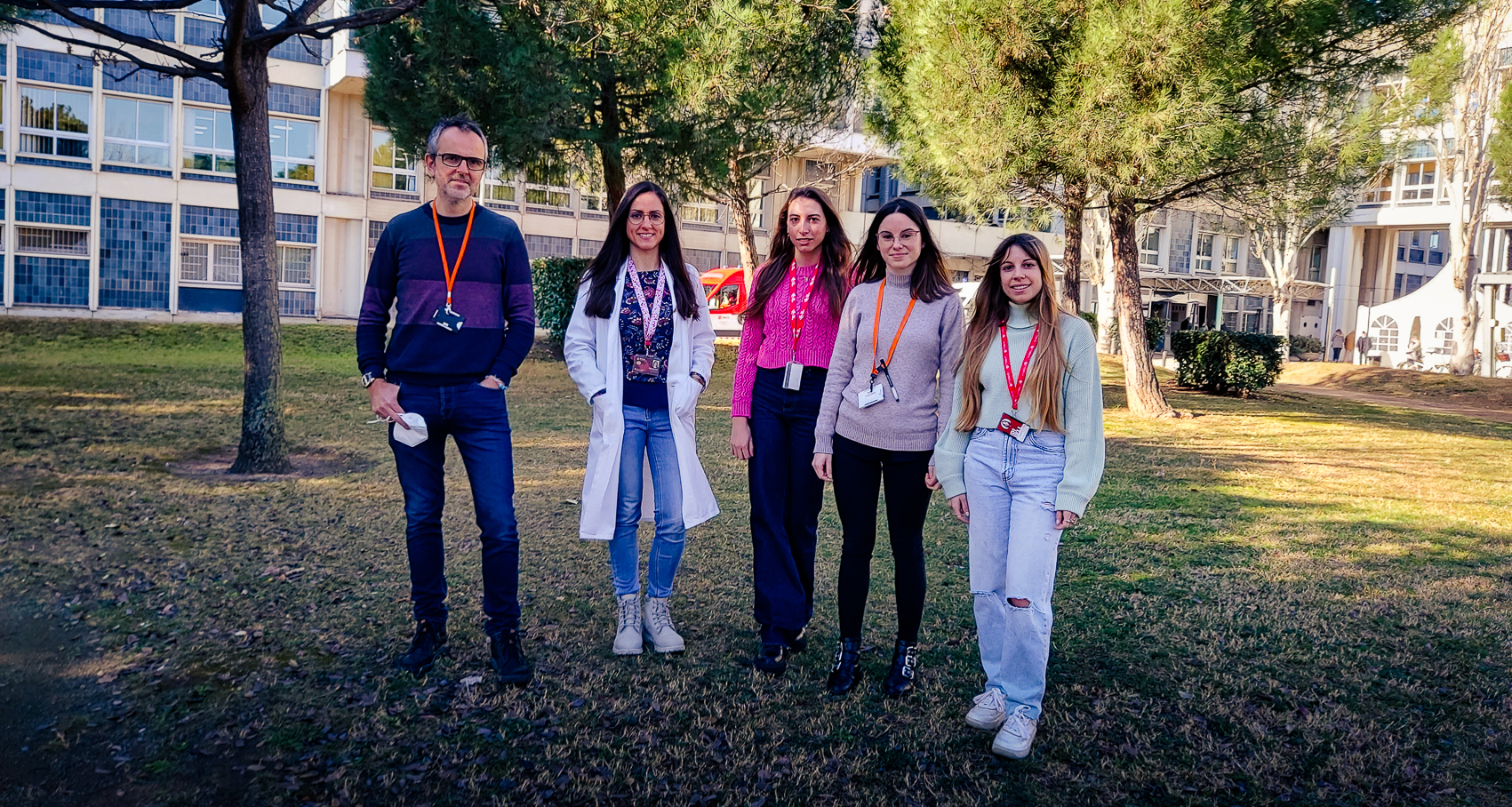
Group members

David G. Molleví

Group leaders

IP

Natalia Molina

PhD student

Predoctoral researcher

María Bañuls

Laboratory technician

Laboratory technician

Núria Ruiz

Clinical researcher

Clinical collaborator

Kristel Mils

Clinical researcher

Clinical collaborator

Laura Lladó

Clinical researcher

Clinical collaborator

Publications

A monotonic and prognostic genomic signature from fibroblasts for colorectal cancer initiation, progression, and metastasis

16 de May de 2014/in Molleví's Lab/by miguel

Mol Cancer Res. 2014 Sep;12(9):1254-66. doi: 10.1158/1541-7786.MCR-14-0121. Epub 2014 May 14. ABSTRACT The differential gene expression patterns between normal colonic fibroblasts (NCF), carcinoma-associated fibroblasts from primary tumors (CAF-PT), and CAFs from hepatic metastasis (CAF-LM) are hypothesized to be useful for predicting relapse in primary tumors. A transcriptomic profile of NCF (n = 9), CAF-PT (n […]

https://procure-oncology.com/wp-content/uploads/2023/10/Procure-icoRecurso-1@2x-100.jpg 0 0 miguel https://procure-oncology.com/wp-content/uploads/2023/10/Procure-icoRecurso-1@2x-100.jpg miguel2014-05-16 10:00:002014-05-16 10:00:00A monotonic and prognostic genomic signature from fibroblasts for colorectal cancer initiation, progression, and metastasis

Aberrant gene expression in mucosa adjacent to tumor reveals a molecular crosstalk in colon cancer

7 de March de 2014/in Molleví's Lab/by miguel

Mol Cancer. 2014 Mar 5;13:46. doi: 10.1186/1476-4598-13-46. ABSTRACT BACKGROUND: A colorectal tumor is not an isolated entity growing in a restricted location of the body. The patient’s gut environment constitutes the framework where the tumor evolves and this relationship promotes and includes a complex and tight correlation of the tumor with inflammation, blood vessels formation, […]

https://procure-oncology.com/wp-content/uploads/2023/10/Procure-icoRecurso-1@2x-100.jpg 0 0 miguel https://procure-oncology.com/wp-content/uploads/2023/10/Procure-icoRecurso-1@2x-100.jpg miguel2014-03-07 11:00:002014-03-07 11:00:00Aberrant gene expression in mucosa adjacent to tumor reveals a molecular crosstalk in colon cancer

Lurbinectedin (PM01183), a new DNA minor groove binder, inhibits growth of orthotopic primary graft of cisplatin-resistant epithelial ovarian cancer

17 de August de 2012/in Molleví's Lab/by miguel

Clin Cancer Res. 2012 Oct 1;18(19):5399-411. doi: 10.1158/1078-0432.CCR-12-1513. Epub 2012 Aug 15. ABSTRACT PURPOSE: Epithelial ovarian cancer (EOC) is the fifth leading cause of death in women diagnosed with gynecologic malignancies. The low survival rate is because of its advanced-stage diagnosis and either intrinsic or acquired resistance to standard platinum-based chemotherapy. So, the development of […]

https://procure-oncology.com/wp-content/uploads/2023/10/Procure-icoRecurso-1@2x-100.jpg 0 0 miguel https://procure-oncology.com/wp-content/uploads/2023/10/Procure-icoRecurso-1@2x-100.jpg miguel2012-08-17 10:00:002012-08-17 10:00:00Lurbinectedin (PM01183), a new DNA minor groove binder, inhibits growth of orthotopic primary graft of cisplatin-resistant epithelial ovarian cancer

Stromal interaction molecule 2 (STIM2) is frequently overexpressed in colorectal tumors and confers a tumor cell growth suppressor phenotype

30 de November de 2011/in Molleví's Lab/by miguel

Mol Carcinog. 2012 Sep;51(9):746-53. doi: 10.1002/mc.20843. Epub 2011 Aug 30. ABSTRACT Allelic imbalances at chromosome 4p have been largely documented in many different tumor types. In colorectal cancer, loss of heterozygosity (LOH) at 4p15 has been associated with tumor aggressiveness and poor patient outcome, however no target genes in the region have been identified to […]

https://procure-oncology.com/wp-content/uploads/2023/10/Procure-icoRecurso-1@2x-100.jpg 0 0 miguel https://procure-oncology.com/wp-content/uploads/2023/10/Procure-icoRecurso-1@2x-100.jpg miguel2011-11-30 11:00:002011-11-30 11:00:00Stromal interaction molecule 2 (STIM2) is frequently overexpressed in colorectal tumors and confers a tumor cell growth suppressor phenotype

Hepatic carcinoma-associated fibroblasts promote an adaptative response in colorectal cancer cells that inhibit proliferation and apoptosis: nonresistant cells die by nonapoptotic cell death

27 de October de 2011/in Molleví's Lab/by miguel

Neoplasia. 2011 Oct;13(10):931-46. doi: 10.1593/neo.11706. ABSTRACT Carcinoma-associated fibroblasts (CAFs) are important contributors of microenvironment in determining the tumor’s fate. This study aimed to compare the influence of liver microenvironment and primary tumor microenvironment on the behavior of colorectal carcinoma. Conditioned medium (CM) from normal colonic fibroblasts (NCFs), CAFs from primary tumor (CAF-PT) or liver metastasis […]

https://procure-oncology.com/wp-content/uploads/2023/10/Procure-icoRecurso-1@2x-100.jpg 0 0 miguel https://procure-oncology.com/wp-content/uploads/2023/10/Procure-icoRecurso-1@2x-100.jpg miguel2011-10-27 10:00:002011-10-27 10:00:00Hepatic carcinoma-associated fibroblasts promote an adaptative response in colorectal cancer cells that inhibit proliferation and apoptosis: nonresistant cells die by nonapoptotic cell death
Page 4 of 7«‹23456›»

Collaborations

Peter B. Vermeulen, University of Antwerp and GZA Hospitals, Belgium
Artur Mezheyeuski, VHIO, Barcelona
Pnina Brodt, Mc Gill University, Montreal, Canada
and Liver Metastases Research Network members

Molleví’s Lab
Program Against Cancer Therapeutic Resistance

CONTACT US

Campus IDIBELL
(L’Hospitalet del Llobregat)
Hospital Duran i Reynals, Gran Via 199,
L’Hospitalet del Llobregat,
Barcelona 08908
Tel. +34 93 260 7952

Campus IGTP-IJC
(Badalona)
Campus Can Ruti – IGTP – Building Muntanya,
Rd. Can Ruti, Camí de les escoles s/n,
Badalona, Barcelona 08916
Tel. +34 93 554 3069

Campus IDIBGI
(Girona)
Parc Hospitalari Martí i Julià de Salt, Dr. Castany s/n,
Salt, Girona 17190
Tel. +34 872 987 087

© Copyright - Edisenius
  • Privacy Policy
  • Cookie Policy
  • Legal Notice
Antolin's LabAntolin’s Lab
Scroll to top
Manage cookie consent
To offer the best experiences, we use technologies such as cookies to store and/or access device information. Consent to these technologies will allow us to process data such as browsing behavior or unique IDs on this site. Failure to consent, or withdrawal of consent, may adversely affect certain features and functions.
Functional Always active
Storage or technical access is strictly necessary for the legitimate purpose of allowing the use of a specific service explicitly requested by the subscriber or user, or for the sole purpose of carrying out the transmission of a communication over an electronic communications network.
Preferences
The technical storage or access is necessary for the legitimate purpose of storing preferences that are not requested by the subscriber or user.
Statistics
The technical storage or access that is used exclusively for statistical purposes. Storage or technical access that is used exclusively for anonymous statistical purposes. Without a requirement, voluntary compliance by your Internet service provider, or additional records from a third party, information stored or retrieved solely for this purpose cannot be used to identify you.
Marketing
Storage or technical access is necessary to create user profiles to send advertising, or to track the user on a website or several websites for similar marketing purposes.
Manage options Manage services Manage {vendor_count} vendors Read more about these purposes
See preferences
{title} {title} {title}