• Twitter
  • Jobs
ProCURE oncology
  • HOME
  • ABOUT US
  • RESEARCH GROUP
    • Molleví’s Lab
    • Antolin’s Lab
    • Alemany’s & Piulats’s lab
    • Martínez-Balibrea’s Lab
    • Aytes’s Lab
    • Belver’s Lab
    • Pujana’s Lab
    • Menendez’s Lab
    • Sureda’s & Farre’s Lab
    • Casanovas’s Lab
    • Viñals’s lab
  • INNOVATION
  • NEWS
  • CONTACT
  • Menu Menu
VIEW ALL RESEARCH-GROUP

Tumor microenvironment and resistance
Molleví’s Lab

DESCRIPTION

The research group studies the influence of microenvironment, and particularly carcinoma-associated fibroblasts (CAFs) on tumorigenesis and therapy resistance in highly desmoplastic tumors, mainly colorectal hepatic metastases.

The research group studies the influence of the microenvironment on carcinogenesis in highly desmoplastic tumors, mainly liver metastases from colorectal cancer, since in these tumors cells from the microenvironment play a decisive role in the formation of the characteristic histological growth patterns (HGP) of these malignant lesions, and consequently, in the prognosis of the disease. In addition, the acquisition of resistant phenotypes has also been associated with a particular HGP.

What is desmoplasia? Desmoplasia is a histological feature characterized by an increase in the production of specific collagens, fibronectin, glycosaminoglycans, proteoglycans and other components of the extracellular matrix, as well as a deregulated increase in the number of mesenchymal cells, especially carcinoma-associated fibroblasts (CAFs). In hepatic malignancies, CAFs can come from different cell types, e.g. portal fibroblasts, hepatic stellate cells, vascular smooth muscle cells, pericytes, among others. Likewise, the contribution of each of them to the tumor stroma is variable depending on the type of malignant neoplasm, and interestingly, depending on the place of establishment of the tumor niche, particularly in liver metastases. Furthermore, each of these cell types will maintain a transcriptional program specific to its origin, a fact that leads to an increase in the functional heterogeneity of these cells. This is decisive if we consider CAFs as potential therapeutic targets. Therefore, it is necessary to clearly distinguish those CAFs with pro-tumor properties from those that act in favor of the host, called restrictive or anti-tumor CAFs. And this is a long path still to be walked.

Therefore, the main research interests of the group are:

  • To decipher the contribution and function of the different CAF precursors in liver malignancies and particularly on the different types of HGP in liver metastases.
  • Reprogramming specific CAFs as therapeutic strategy in desmoplastic tumors 
  • Discovery of stromal biomarkers for response prediction to neoadjuvant treatment in hepatic metastases from colorectal carcinoma.
  • Predicting the histologic growth pattern of liver metastases.

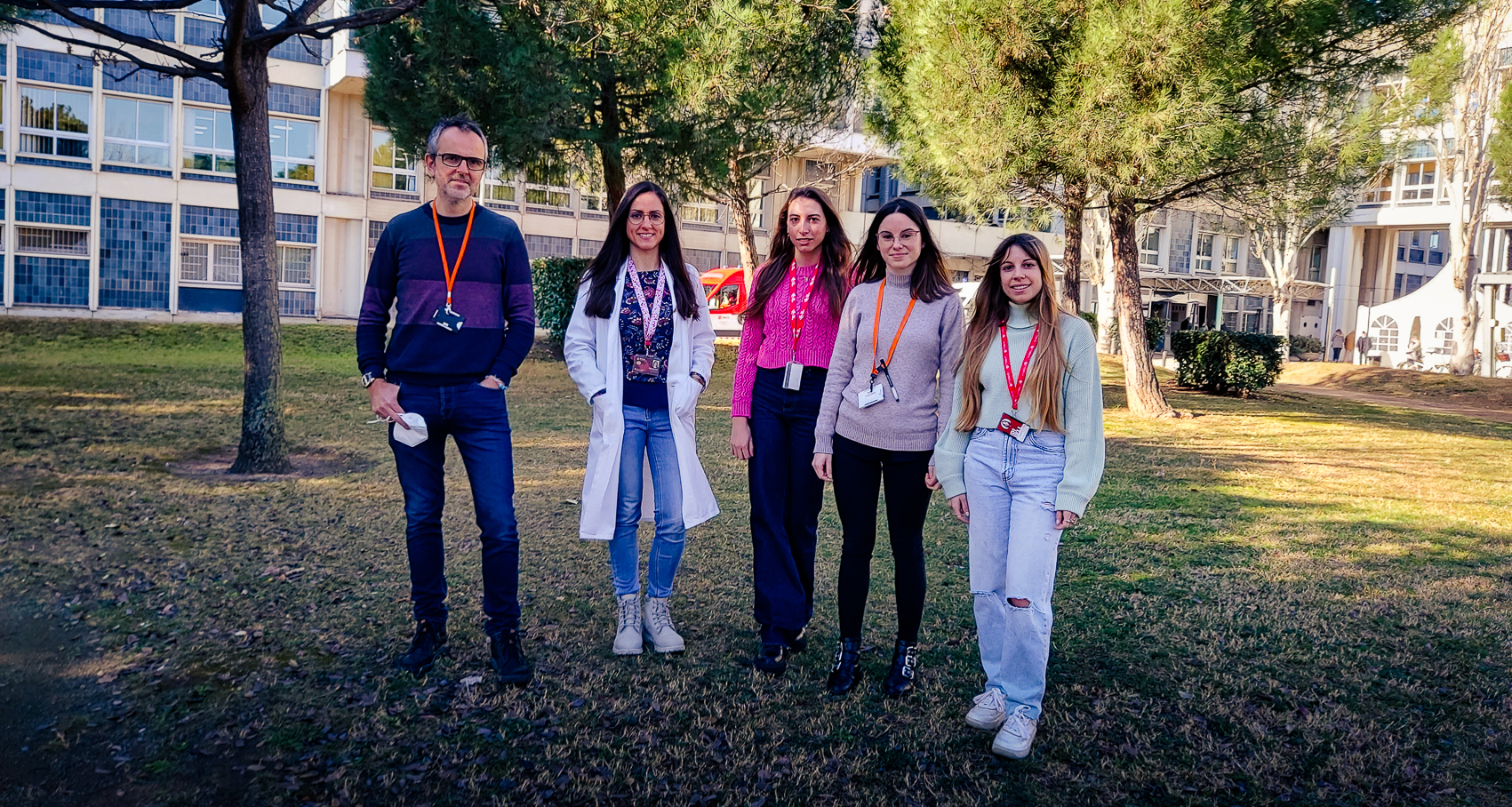
Group members

David G. Molleví

Group leaders

IP

Natalia Molina

PhD student

Predoctoral researcher

María Bañuls

Laboratory technician

Laboratory technician

Núria Ruiz

Clinical researcher

Clinical collaborator

Kristel Mils

Clinical researcher

Clinical collaborator

Laura Lladó

Clinical researcher

Clinical collaborator

Publications

Carcinoma-associated fibroblasts affect sensitivity to oxaliplatin and 5FU in colorectal cancer cells

13 de August de 2016/in Molleví's Lab/by miguel

Oncotarget. 2016 Sep 13;7(37):59766-59780. doi: 10.18632/oncotarget.11121. ABSTRACT The importance of tumor microenvironment (TME) as a relevant contributor to cancer progression and its role in the development of de novo resistance to targeted therapies has become increasingly apparent. However, the mechanisms of microenvironment-mediated drug resistance for nonspecific conventional chemotherapeutic agents, such as platinum compounds or antimetabolites, […]

https://procure-oncology.com/wp-content/uploads/2023/10/Procure-icoRecurso-1@2x-100.jpg 0 0 miguel https://procure-oncology.com/wp-content/uploads/2023/10/Procure-icoRecurso-1@2x-100.jpg miguel2016-08-13 10:00:002016-08-13 10:00:00Carcinoma-associated fibroblasts affect sensitivity to oxaliplatin and 5FU in colorectal cancer cells

A Vulnerability of a Subset of Colon Cancers with Potential Clinical Utility

9 de April de 2016/in Molleví's Lab/by miguel

Cell. 2016 Apr 7;165(2):317-30. doi: 10.1016/j.cell.2016.02.059. ABSTRACT BRAF(V600E) mutant colon cancers (CCs) have a characteristic gene expression signature that is also found in some tumors lacking this mutation. Collectively, they are referred to as “BRAF-like” tumors and represent some 20% of CCs. We used a shRNA-based genetic screen focused on genes upregulated in BRAF(V600E) CCs […]

https://procure-oncology.com/wp-content/uploads/2023/10/Procure-icoRecurso-1@2x-100.jpg 0 0 miguel https://procure-oncology.com/wp-content/uploads/2023/10/Procure-icoRecurso-1@2x-100.jpg miguel2016-04-09 10:00:002016-04-09 10:00:00A Vulnerability of a Subset of Colon Cancers with Potential Clinical Utility

Mutanome and expression of immune response genes in microsatellite stable colon cancer

13 de February de 2016/in Molleví's Lab/by miguel

Oncotarget. 2016 Apr 5;7(14):17711-25. doi: 10.18632/oncotarget.7293. ABSTRACT The aim of this study was to analyze the impact of the mutanome in the prognosis of microsatellite stable stage II CRC tumors. The exome of 42 stage II, microsatellite stable, colon tumors (21 of them relapse) and their paired mucosa were sequenced and analyzed. Although some pathways […]

https://procure-oncology.com/wp-content/uploads/2023/10/Procure-icoRecurso-1@2x-100.jpg 0 0 miguel https://procure-oncology.com/wp-content/uploads/2023/10/Procure-icoRecurso-1@2x-100.jpg miguel2016-02-13 11:00:002016-02-13 11:00:00Mutanome and expression of immune response genes in microsatellite stable colon cancer

A 5-gene classifier from the carcinoma-associated fibroblast transcriptomic profile and clinical outcome in colorectal cancer

14 de August de 2014/in Molleví's Lab/by miguel

Oncotarget. 2014 Aug 15;5(15):6437-52. doi: 10.18632/oncotarget.2237. ABSTRACT Based on 108 differentially expressed genes between carcinoma-associated fibroblasts (CAFs) and paired normal colonic fibroblasts we recently reported, a 5-gene classifier for relapse prediction in Stage II/III colorectal cancer (CRC ) was developed. Its predictive value was validated in datasets GSE17538, GSE33113 and GSE14095. An additional validation was […]

https://procure-oncology.com/wp-content/uploads/2023/10/Procure-icoRecurso-1@2x-100.jpg 0 0 miguel https://procure-oncology.com/wp-content/uploads/2023/10/Procure-icoRecurso-1@2x-100.jpg miguel2014-08-14 10:00:002014-08-14 10:00:00A 5-gene classifier from the carcinoma-associated fibroblast transcriptomic profile and clinical outcome in colorectal cancer

Differences between CAFs and their paired NCF from adjacent colonic mucosa reveal functional heterogeneity of CAFs, providing prognostic information

21 de May de 2014/in Molleví's Lab/by miguel

Mol Oncol. 2014 Oct;8(7):1290-305. doi: 10.1016/j.molonc.2014.04.006. Epub 2014 May 6. ABSTRACT Little is known about the difference in gene expression between carcinoma-associated fibroblasts (CAFs) and paired normal colonic fibroblasts (NCFs) in colorectal cancer. Paired CAFs and NCFs were isolated from eight primary human colorectal carcinoma specimens. In culture conditions, soluble factors secreted by CAFs in […]

https://procure-oncology.com/wp-content/uploads/2023/10/Procure-icoRecurso-1@2x-100.jpg 0 0 miguel https://procure-oncology.com/wp-content/uploads/2023/10/Procure-icoRecurso-1@2x-100.jpg miguel2014-05-21 10:00:002014-05-21 10:00:00Differences between CAFs and their paired NCF from adjacent colonic mucosa reveal functional heterogeneity of CAFs, providing prognostic information
Page 3 of 7‹12345›»

Collaborations

Peter B. Vermeulen, University of Antwerp and GZA Hospitals, Belgium
Artur Mezheyeuski, VHIO, Barcelona
Pnina Brodt, Mc Gill University, Montreal, Canada
and Liver Metastases Research Network members

Molleví’s Lab
Program Against Cancer Therapeutic Resistance

CONTACT US

Campus IDIBELL
(L’Hospitalet del Llobregat)
Hospital Duran i Reynals, Gran Via 199,
L’Hospitalet del Llobregat,
Barcelona 08908
Tel. +34 93 260 7952

Campus IGTP-IJC
(Badalona)
Campus Can Ruti – IGTP – Building Muntanya,
Rd. Can Ruti, Camí de les escoles s/n,
Badalona, Barcelona 08916
Tel. +34 93 554 3069

Campus IDIBGI
(Girona)
Parc Hospitalari Martí i Julià de Salt, Dr. Castany s/n,
Salt, Girona 17190
Tel. +34 872 987 087

© Copyright - Edisenius
  • Privacy Policy
  • Cookie Policy
  • Legal Notice
Antolin's LabAntolin’s Lab
Scroll to top
Manage cookie consent
To offer the best experiences, we use technologies such as cookies to store and/or access device information. Consent to these technologies will allow us to process data such as browsing behavior or unique IDs on this site. Failure to consent, or withdrawal of consent, may adversely affect certain features and functions.
Functional Always active
Storage or technical access is strictly necessary for the legitimate purpose of allowing the use of a specific service explicitly requested by the subscriber or user, or for the sole purpose of carrying out the transmission of a communication over an electronic communications network.
Preferences
The technical storage or access is necessary for the legitimate purpose of storing preferences that are not requested by the subscriber or user.
Statistics
The technical storage or access that is used exclusively for statistical purposes. Storage or technical access that is used exclusively for anonymous statistical purposes. Without a requirement, voluntary compliance by your Internet service provider, or additional records from a third party, information stored or retrieved solely for this purpose cannot be used to identify you.
Marketing
Storage or technical access is necessary to create user profiles to send advertising, or to track the user on a website or several websites for similar marketing purposes.
Manage options Manage services Manage {vendor_count} vendors Read more about these purposes
See preferences
{title} {title} {title}