• Twitter
  • Jobs
ProCURE oncology
  • HOME
  • ABOUT US
  • RESEARCH GROUP
    • Molleví’s Lab
    • Antolin’s Lab
    • Alemany’s & Piulats’s lab
    • Martínez-Balibrea’s Lab
    • Aytes’s Lab
    • Belver’s Lab
    • Pujana’s Lab
    • Menendez’s Lab
    • Sureda’s & Farre’s Lab
    • Casanovas’s Lab
    • Viñals’s lab
  • INNOVATION
  • NEWS
  • CONTACT
  • Menu Menu
VIEW ALL RESEARCH-GROUP

Leukemia and immuno-oncology
Belver’s Lab

DESCRIPTION

Our research is focused on the study of the molecular mechanisms driving leukemia and lymphoma generation, and on the identification of new therapeutic targets that can potentially translate into novel strategies for the treatment of these diseases.

The Leukemia and Immuno-Oncology group focuses its work on two main research lines. On the one hand, the group studies the molecular mechanisms driving oncogenic transformation and progression in Juvenile Myelomonocytic Leukemia (JMML) with the aim of identifying therapeutic targets that can potentially translate into new treatments for these patients. On the other hand, our team is also interested in studying the impact of human papillomavirus (HPV) infection in the development of B-cell lymphoma.

Molecular pathways and targeted therapies in JMML

Juvenile myelomonocytic leukemia (JMML) is an aggressive myeloproliferative neoplasm of early childhood for which hematopoietic stem cell transplantation (HSCT) is currently the only curative treatment. One out of three children diagnosed with JMML succumb to disease. And these numbers are even more dramatic for those patients carrying activating mutations in the PTPN11 gene, which present the most aggressive forms of the disease with a survival rate of only 25%.

JMML presents a low mutational burden in the coding genome, with five canonical mutations in RAS pathway genes (PTPN11, KRAS, NRAS, CBL and NF1) that act as drivers in more than 90% of the patients and only a few described secondary mutations. However, this apparently simple genetic landscape is accompanied by a high phenotypical variability within the patients, which cannot be explained by our current knowledge. Thus, JMML is still an important clinical challenge due to its heterogeneity, difficult diagnosis, poor prognosis, and the lack of alternative treatment options other than HSCT.

To shed light on these questions, our group has set two main goals:

  1. To identify potential functional aberrations in JMML non-coding regulatory elements that can contribute to the pathogenesis of the disease and explain its heterogeneity.
  2. To develop new small-molecule compounds that block the oncogenic effects of PTPN11 mutations as a therapeutic alternative for the treatment of aggressive JMML.

Role of HPV in B-cell lymphoma pathogenesis

HPV infections are the most common sexually transmitted diseases, affecting approximately 80% of all men and women during their lifetime. Interestingly, HPV has been associated to an increased B-cell lymphoma incidence. Moreover, some studies have shown evidence of HPV infection in B-cell lymphoma cells, suggesting that HPV-driven oncogenic effects might directly contribute to B-cell transformation. However, the specific role of HPV in lymphomagenesis remains unknown. The aim of this project is to shed light on the mechanisms underlying the association between HPV and B-cell lymphoma.

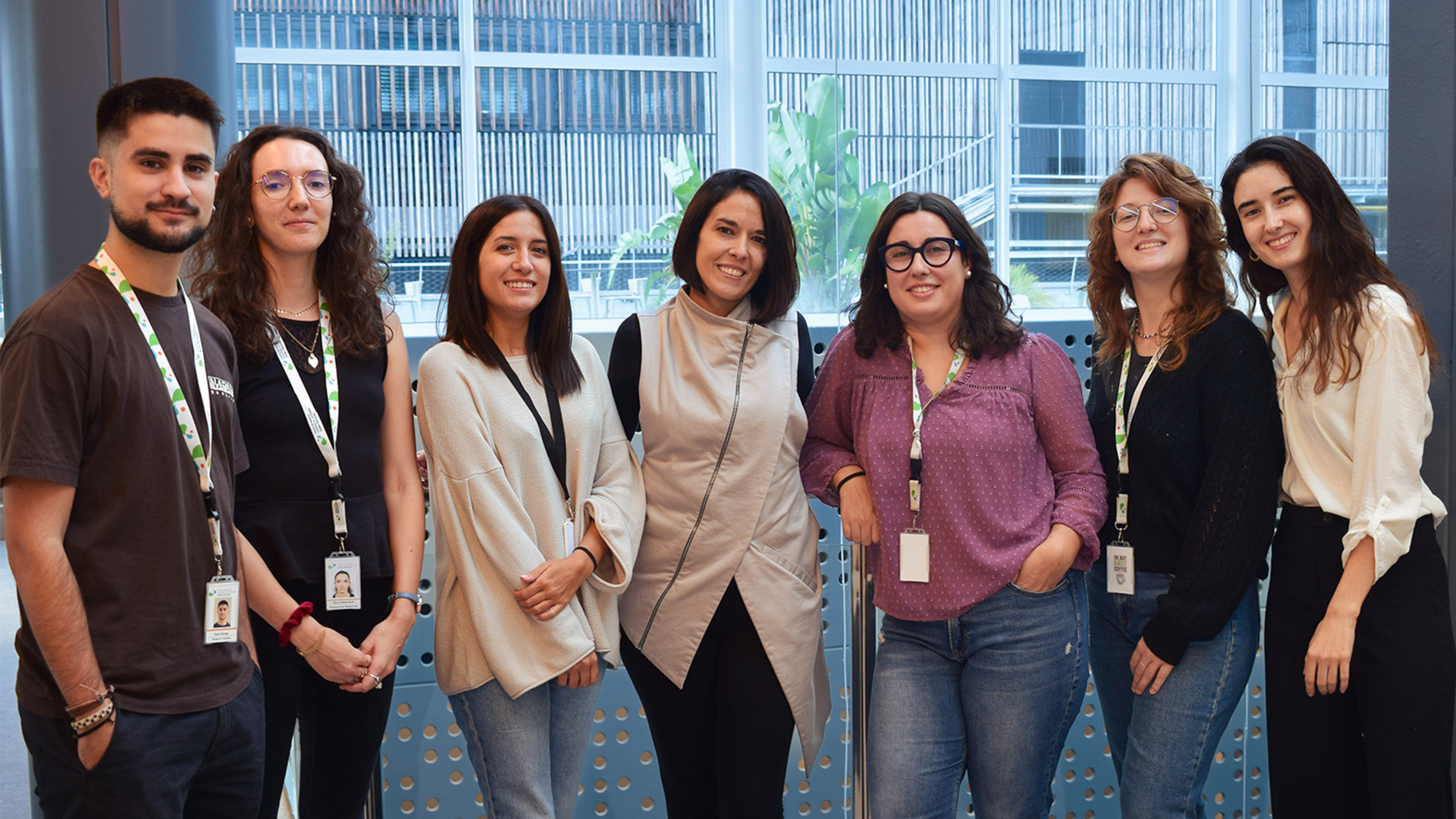
Group members

Laura Belver

Group leaders

Group Leader

Sandra Alonso-Moreno

Support staff

Lab manager

Anna Campagnari

Young investigators

PhD student

Alice Debernardi

Young investigators

Postdoctoral fellow

Claudia Fiñana

Young investigators

PhD student

Noel Gómez-Molina

Young investigators

PhD student

Elisabeth Serracanta

Support staff

Research assistant

Publications

Tcf1 is essential for initiation of oncogenic Notch1-driven chromatin topology in T-ALL

12 de January de 2022/in Belver's Lab/by miguel

Blood. 2022 Apr 21;139(16):2483-2498. doi: 10.1182/blood.2021012077. ABSTRACT NOTCH1 is a well-established lineage specifier for T cells and among the most frequently mutated genes throughout all subclasses of T cell acute lymphoblastic leukemia (T-ALL). How oncogenic NOTCH1 signaling launches a leukemia-prone chromatin landscape during T-ALL initiation is unknown. Here we demonstrate an essential role for the […]

https://procure-oncology.com/wp-content/uploads/2023/10/Procure-icoRecurso-1@2x-100.jpg 0 0 miguel https://procure-oncology.com/wp-content/uploads/2023/10/Procure-icoRecurso-1@2x-100.jpg miguel2022-01-12 11:00:002022-01-12 11:00:00Tcf1 is essential for initiation of oncogenic Notch1-driven chromatin topology in T-ALL

Insights into the mechanisms underlying aberrant SOX11 oncogene expression in mantle cell lymphoma

29 de August de 2021/in Belver's Lab/by miguel

Leukemia. 2022 Feb;36(2):583-587. doi: 10.1038/s41375-021-01389-w. Epub 2021 Aug 28. NO ABSTRACT PMID:34455421 | DOI:10.1038/s41375-021-01389-w

https://procure-oncology.com/wp-content/uploads/2023/10/Procure-icoRecurso-1@2x-100.jpg 0 0 miguel https://procure-oncology.com/wp-content/uploads/2023/10/Procure-icoRecurso-1@2x-100.jpg miguel2021-08-29 10:00:002021-08-29 10:00:00Insights into the mechanisms underlying aberrant SOX11 oncogene expression in mantle cell lymphoma

Deregulation of enhancer structure, function, and dynamics in acute lymphoblastic leukemia

16 de April de 2021/in Belver's Lab/by miguel

Trends Immunol. 2021 May;42(5):418-431. doi: 10.1016/j.it.2021.03.005. Epub 2021 Apr 12. ABSTRACT Enhancers control dynamic changes in gene expression and orchestrate the tightly controlled transcriptional circuitries that direct and coordinate cell growth, proliferation, survival, lineage commitment, and differentiation during lymphoid development. Enhancer hijacking and neoenhancer formation at oncogene loci, as well as aberrant activation of oncogene-associated […]

https://procure-oncology.com/wp-content/uploads/2023/10/Procure-icoRecurso-1@2x-100.jpg 0 0 miguel https://procure-oncology.com/wp-content/uploads/2023/10/Procure-icoRecurso-1@2x-100.jpg miguel2021-04-16 10:00:002021-04-16 10:00:00Deregulation of enhancer structure, function, and dynamics in acute lymphoblastic leukemia

Mutational and functional genetics mapping of chemotherapy resistance mechanisms in relapsed acute lymphoblastic leukemia

2 de April de 2021/in Belver's Lab/by miguel

Nat Cancer. 2020 Nov;1(11):1113-1127. doi: 10.1038/s43018-020-00124-1. Epub 2020 Oct 19. ABSTRACT Multi-agent combination chemotherapy can be curative in acute lymphoblastic leukemia (ALL). Still, patients with primary refractory disease or with relapsed leukemia have a very poor prognosis. Here we integrate an in-depth dissection of the mutational landscape across diagnostic and relapsed pediatric and adult ALL […]

https://procure-oncology.com/wp-content/uploads/2023/10/Procure-icoRecurso-1@2x-100.jpg 0 0 miguel https://procure-oncology.com/wp-content/uploads/2023/10/Procure-icoRecurso-1@2x-100.jpg miguel2021-04-02 10:00:002021-04-02 10:00:00Mutational and functional genetics mapping of chemotherapy resistance mechanisms in relapsed acute lymphoblastic leukemia

Interplay between UNG and AID governs intratumoral heterogeneity in mature B cell lymphoma

28 de December de 2020/in Belver's Lab/by miguel

PLoS Genet. 2020 Dec 23;16(12):e1008960. doi: 10.1371/journal.pgen.1008960. eCollection 2020 Dec. ABSTRACT Most B cell lymphomas originate from B cells that have germinal center (GC) experience and bear chromosome translocations and numerous point mutations. GC B cells remodel their immunoglobulin (Ig) genes by somatic hypermutation (SHM) and class switch recombination (CSR) in their Ig genes. Activation […]

https://procure-oncology.com/wp-content/uploads/2023/10/Procure-icoRecurso-1@2x-100.jpg 0 0 miguel https://procure-oncology.com/wp-content/uploads/2023/10/Procure-icoRecurso-1@2x-100.jpg miguel2020-12-28 11:00:002020-12-28 11:00:00Interplay between UNG and AID governs intratumoral heterogeneity in mature B cell lymphoma
Page 2 of 512345

Research Projects

Title: Design of cell therapies based on DNA mimetic peptides for the treatment of patients with Systemic Lupus Erythematosus

Project Number: N/A

PI: Laura Belver

Source of Support: Merck Salud Foundation and FEDER Foundation

Project Start and End Date: 07/2023 – 06/2026

Total Award Amount: 30,000€

Title: Development of new cell therapies for the treatment of patients with Systemic Lupus Erythematosus patients

Project Number: N/A

PI: Laura Belver

Source of Support: FEDER Foundation

Project Start and End Date: 01/2023 – 06/2024

Total Award Amount: 25,000€

Title: Genetics and molecular mechanisms in hematologic malignancies

Project Number: RYC2020-029400-I

PI: Laura Belver

Source of Support: Ramón y Cajal Program – Spanish Ministry of Science and Innovation

Project Start and End Date: 01/2022 – 12/2026

Total Award Amount: 219,250€

Title: Functional impact of enhancer-associated non-coding mutations in Juvenile Myelomonocytic Leukemia

Project Number: PID2020-117645RB-I00

PI: Laura Belver

Source of Support: Spanish Ministry of Science and Innovation

Project Start and End Date: 09/2021 – 08/2024

Total Award Amount: 205,700€

Title: Molecular pathways and targeted therapies in Juvenile Myelomonocytic Leukemia

Project Number: BFero2020.03

PI: Laura Belver

Source of Support: FERO Foundation

Project Start and End Date: 12/2020 – 11/2023

Total Award Amount: 80,000€

Collaborations

Dominique Bonnet (Crick Institute, London)

Kevin Rouault-Pierre (Barts Centre, London)

Hélène Cavé (Hôpital Robert Debré, Paris)

Anna Sureda (Catalan Institute of Oncology, Barcelona)

Laia Alemany (Catalan Institute of Oncology, Barcelona)

Albert Català (Sant Joan de Dèu Hospital, Barcelona)

Antonio Pérez-Martínez (La Paz Hospital, Madrid)

Ana Galera (Virgen de Arrixaca Hospital, Murcia)

Ginés Luengo (Santa Lucía General University Hospital, Cartagena)

Research group photo
Program Against Cancer Therapeutic Resistance

CONTACT US

Campus IDIBELL
(L’Hospitalet del Llobregat)
Hospital Duran i Reynals, Gran Via 199,
L’Hospitalet del Llobregat,
Barcelona 08908
Tel. +34 93 260 7952

Campus IGTP-IJC
(Badalona)
Campus Can Ruti – IGTP – Building Muntanya,
Rd. Can Ruti, Camí de les escoles s/n,
Badalona, Barcelona 08916
Tel. +34 93 554 3069

Campus IDIBGI
(Girona)
Parc Hospitalari Martí i Julià de Salt, Dr. Castany s/n,
Salt, Girona 17190
Tel. +34 872 987 087

© Copyright - Edisenius
  • Privacy Policy
  • Cookie Policy
  • Legal Notice
Aytes’s LabAytes's LabPujana's LabPujana’s Lab
Scroll to top
Manage cookie consent
To offer the best experiences, we use technologies such as cookies to store and/or access device information. Consent to these technologies will allow us to process data such as browsing behavior or unique IDs on this site. Failure to consent, or withdrawal of consent, may adversely affect certain features and functions.
Functional Always active
Storage or technical access is strictly necessary for the legitimate purpose of allowing the use of a specific service explicitly requested by the subscriber or user, or for the sole purpose of carrying out the transmission of a communication over an electronic communications network.
Preferences
The technical storage or access is necessary for the legitimate purpose of storing preferences that are not requested by the subscriber or user.
Statistics
The technical storage or access that is used exclusively for statistical purposes. Storage or technical access that is used exclusively for anonymous statistical purposes. Without a requirement, voluntary compliance by your Internet service provider, or additional records from a third party, information stored or retrieved solely for this purpose cannot be used to identify you.
Marketing
Storage or technical access is necessary to create user profiles to send advertising, or to track the user on a website or several websites for similar marketing purposes.
Manage options Manage services Manage {vendor_count} vendors Read more about these purposes
See preferences
{title} {title} {title}