• Twitter
  • Jobs
ProCURE oncology
  • HOME
  • ABOUT US
  • RESEARCH GROUP
    • Molleví’s Lab
    • Antolin’s Lab
    • Alemany’s & Piulats’s lab
    • Martínez-Balibrea’s Lab
    • Aytes’s Lab
    • Belver’s Lab
    • Pujana’s Lab
    • Menendez’s Lab
    • Sureda’s & Farre’s Lab
    • Casanovas’s Lab
    • Viñals’s lab
  • INNOVATION
  • NEWS
  • CONTACT
  • Menu Menu
VIEW ALL RESEARCH-GROUP

Medicinal chemistry and drug design
Antolin’s Lab

DESCRIPTION

Our research bridges Chemistry, Biology and Data Science to better understand the effects of approved drugs to harness them in personalized and precision oncology and to design safer and more effective new cancer therapeutics.

The Medicinal Chemistry & Drug Design group broadly focuses on three main lines of research: developing open science chemical biology resources, harnessing the effects of drugs at the systems level in precision medicine, and exploiting Big Data and AI to discover more efficacious drugs with a particular focus in oncology. 

Open Science initiatives in Chemical Biology

As an example of the first line of research, Dr. Antolin serves as Associate Director of Cheminformatics at the Chemical Probes Portal, an international initiative and freely available resource that coordinates expert rating of chemical probes to improve the robustness and reproducibility of biomedical research (Antolin AA, et al. Nucleic Acids Research, 2023). We also collaborate with the public cancer knowledgebase canSAR, and with the Target 2035 initiative, among others.

Systems Pharmacology to better harness current drugs in precision medicine

We are broadly interested in understanding the unexplained effects of drugs to better use our current therapeutic arsenal in precision medicine. For example, we have recently discovered the unexpected biological activity of the metabolite of a cancer drug that could open new avenues for its precise use in prostate cancer while offering unexpected repurposing opportunities in Parkinson’s Disease (Hu H, et al. Cell Chemical Biology, in press). We have also recently used machine learning approaches to better understand how certain drugs produce a side-effect termed phospholipidosis (Hu H, et al. Cell Chemical Biology, S2451-9456, 00322-7). We are particularly interested in the development and use of computational methods to predict the mechanism of action of compounds – their binding to specific protein targets (polypharmacology) – and we have recently started an industrial collaboration to harness high-content microscopy and Deep Learning to predict polypharmacology.

Exploiting Big Data and AI to discover more effective drugs

The final aim of the team is to contribute to the discovery of new drugs for disease of high unmet medical need with a particular focus in oncology. On the one hand, we develop new cheminformatic methodologies centered in the application of machine learning for multi-target drug design. On the other hand, we engage in collaborative drug discovery projects where we try to collaborate closely with industry and clinicians to speed the translation of results. For example, we have recently started coordinating an international collaborative project with the Institute of Cancer Research (UK) and the company VIVAN Therapeutics (UK) that aims at discovering new multi-target KRAS inhibitors that resist resistance.

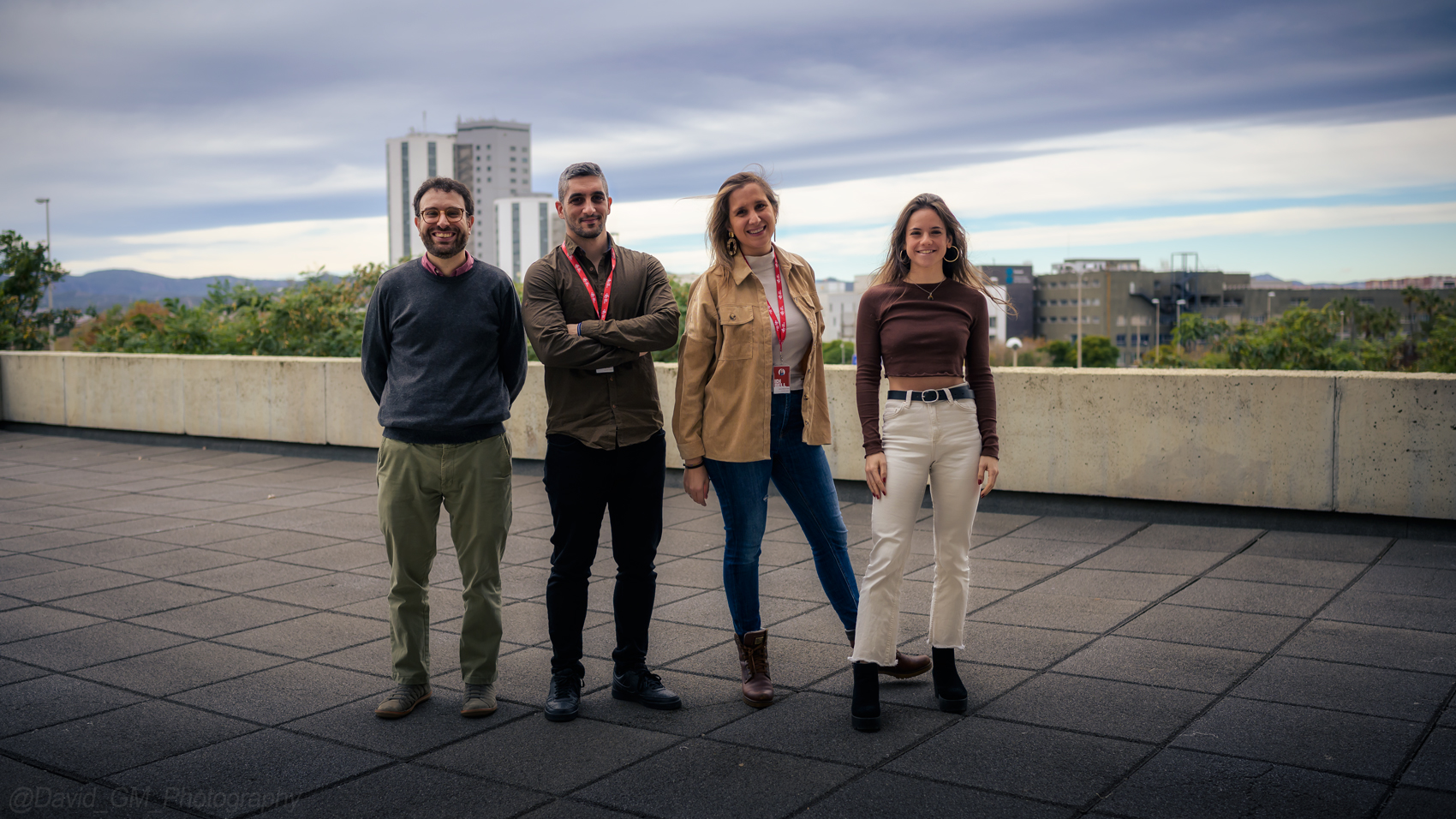
Group members

Albert Antolin

Group leaders

Group Leader

Leticia Manen

Support staff

Lab Manager / Staff Scientist

Santiago Santos

Support staff

Technician

Publications

canSAR: an updated cancer research and drug discovery knowledgebase

18 de December de 2015/in Antolin's lab/by miguel

Nucleic Acids Res. 2016 Jan 4;44(D1):D938-43. doi: 10.1093/nar/gkv1030. Epub 2015 Dec 15. ABSTRACT canSAR (http://cansar.icr.ac.uk) is a publicly available, multidisciplinary, cancer-focused knowledgebase developed to support cancer translational research and drug discovery. canSAR integrates genomic, protein, pharmacological, drug and chemical data with structural biology, protein networks and druggability data. canSAR is widely used to rapidly access […]

https://procure-oncology.com/wp-content/uploads/2023/10/Procure-icoRecurso-1@2x-100.jpg 0 0 miguel https://procure-oncology.com/wp-content/uploads/2023/10/Procure-icoRecurso-1@2x-100.jpg miguel2015-12-18 11:00:002015-12-18 11:00:00canSAR: an updated cancer research and drug discovery knowledgebase

In silico prescription of anticancer drugs to cohorts of 28 tumor types reveals targeting opportunities

12 de March de 2015/in Antolin's lab/by miguel

Cancer Cell. 2015 Mar 9;27(3):382-96. doi: 10.1016/j.ccell.2015.02.007. ABSTRACT Large efforts dedicated to detect somatic alterations across tumor genomes/exomes are expected to produce significant improvements in precision cancer medicine. However, high inter-tumor heterogeneity is a major obstacle to developing and applying therapeutic targeted agents to treat most cancer patients. Here, we offer a comprehensive assessment of […]

https://procure-oncology.com/wp-content/uploads/2023/10/Procure-icoRecurso-1@2x-100.jpg 0 0 miguel https://procure-oncology.com/wp-content/uploads/2023/10/Procure-icoRecurso-1@2x-100.jpg miguel2015-03-12 10:00:002015-03-12 10:00:00In silico prescription of anticancer drugs to cohorts of 28 tumor types reveals targeting opportunities

Distant polypharmacology among MLP chemical probes

4 de November de 2014/in Antolin's lab/by miguel

ACS Chem Biol. 2015 Feb 20;10(2):395-400. doi: 10.1021/cb500393m. Epub 2014 Nov 6. ABSTRACT Small molecules are essential tool compounds to probe the role of proteins in biology and advance toward more efficient therapeutics. However, they are used without a complete knowledge of their selectivity across the entire proteome, at risk of confounding their effects due […]

https://procure-oncology.com/wp-content/uploads/2023/10/Procure-icoRecurso-1@2x-100.jpg 0 0 miguel https://procure-oncology.com/wp-content/uploads/2023/10/Procure-icoRecurso-1@2x-100.jpg miguel2014-11-04 11:00:002014-11-04 11:00:00Distant polypharmacology among MLP chemical probes

Linking off-target kinase pharmacology to the differential cellular effects observed among PARP inhibitors

18 de March de 2014/in Antolin's lab/by miguel

Oncotarget. 2014 May 30;5(10):3023-8. doi: 10.18632/oncotarget.1814. ABSTRACT PARP inhibitors hold promise as a novel class of targeted anticancer drugs. However, their true mechanism of action is still not well understood following recent reports that show marked differences in cellular effects. Here, we demonstrate that three PARP drug candidates, namely, rucaparib, veliparib, and olaparib, have a […]

https://procure-oncology.com/wp-content/uploads/2023/10/Procure-icoRecurso-1@2x-100.jpg 0 0 miguel https://procure-oncology.com/wp-content/uploads/2023/10/Procure-icoRecurso-1@2x-100.jpg miguel2014-03-18 10:00:002014-03-18 10:00:00Linking off-target kinase pharmacology to the differential cellular effects observed among PARP inhibitors

Exploring the effect of PARP-1 flexibility in docking studies

24 de September de 2013/in Antolin's lab/by miguel

J Mol Graph Model. 2013 Sep;45:192-201. doi: 10.1016/j.jmgm.2013.08.006. Epub 2013 Sep 3. ABSTRACT Poly(ADP-ribose)polymerase-1 (PARP-1) is an enzyme belonging to the ADP-ribosyltransferase family. A large body of works has validated PARP-1 as an attractive drug target for different therapeutic areas, including cancers and ischemia. Accordingly, sampling the conformational space of the enzyme is pivotal to […]

https://procure-oncology.com/wp-content/uploads/2023/10/Procure-icoRecurso-1@2x-100.jpg 0 0 miguel https://procure-oncology.com/wp-content/uploads/2023/10/Procure-icoRecurso-1@2x-100.jpg miguel2013-09-24 10:00:002013-09-24 10:00:00Exploring the effect of PARP-1 flexibility in docking studies
Page 7 of 8«‹5678›

Research Projects

Title: Systems Drug Discovery to Tackle Cancer Drug Resistance

Project Number: CP22/00122 (Miguel Servet Fellowship)

PI: Albert Antolin

Source of Support: Instituto de Salud Carlos III (ISCIII)

Project Start and End Date: 07/2023 – 07/2028

Total Award Amount: 240,000€

Title: Systems-based Characterization of Drug Metabolites to Exploit them in Precision Medicine

Project Number: PID2022-136344OA-I00

PI: Albert Antolin

Source of Support: Spanish Ministry of Science and Innovation

Project Start and End Date: 09/2023 – 08/2026

Total Award Amount: 130,000€

Title: Rational design of multi-target KRAS inhibitors that resist resistance

Project Number: N/A (industrial collaboration, non-competitive)

PI: Albert Antolin

Source of Support: VIVAN Therapeutics

Project Start and End Date: 10/2023 – 10/2024

Total Award Amount: 50,000€

Collaborations

Amadeu Llebaria (IQAC-CSIC, Barcelona)

Antonella Consiglio (UB, Barcelona)

Nahuel Villegas (Vivan Therapeutics, London)

Susanne Muller (SGC, Frankfurt)

Paul Workman (ICR, London)

Bissan Al-Lazikani (MDACC, Houston)

Jordi Mestres (Chemotargets, Barcelona)

Marcos Malumbres (VHIO, Barcelona)

Jonathan Baell (Lyterian Therapeutics, San Francisco)

Andrea Califano (Columbia, NYC)

Antolin's Lab
Program Against Cancer Therapeutic Resistance

CONTACT US

Campus IDIBELL
(L’Hospitalet del Llobregat)
Hospital Duran i Reynals, Gran Via 199,
L’Hospitalet del Llobregat,
Barcelona 08908
Tel. +34 93 260 7952

Campus IGTP-IJC
(Badalona)
Campus Can Ruti – IGTP – Building Muntanya,
Rd. Can Ruti, Camí de les escoles s/n,
Badalona, Barcelona 08916
Tel. +34 93 554 3069

Campus IDIBGI
(Girona)
Parc Hospitalari Martí i Julià de Salt, Dr. Castany s/n,
Salt, Girona 17190
Tel. +34 872 987 087

© Copyright - Edisenius
  • Privacy Policy
  • Cookie Policy
  • Legal Notice
Molleví’s LabMolleví’s LabAlemany's & Piulats's labAlemany’s & Piulats’s lab
Scroll to top
Manage cookie consent
To offer the best experiences, we use technologies such as cookies to store and/or access device information. Consent to these technologies will allow us to process data such as browsing behavior or unique IDs on this site. Failure to consent, or withdrawal of consent, may adversely affect certain features and functions.
Functional Always active
Storage or technical access is strictly necessary for the legitimate purpose of allowing the use of a specific service explicitly requested by the subscriber or user, or for the sole purpose of carrying out the transmission of a communication over an electronic communications network.
Preferences
The technical storage or access is necessary for the legitimate purpose of storing preferences that are not requested by the subscriber or user.
Statistics
The technical storage or access that is used exclusively for statistical purposes. Storage or technical access that is used exclusively for anonymous statistical purposes. Without a requirement, voluntary compliance by your Internet service provider, or additional records from a third party, information stored or retrieved solely for this purpose cannot be used to identify you.
Marketing
Storage or technical access is necessary to create user profiles to send advertising, or to track the user on a website or several websites for similar marketing purposes.
Manage options Manage services Manage {vendor_count} vendors Read more about these purposes
See preferences
{title} {title} {title}