Meeting Proceedings from ICBS 2018- Toward Translational Impact
ACS Chem Biol. 2019 Apr 19;14(4):567-578. doi: 10.1021/acschembio.9b00169. Epub 2019 Mar 12. NO ABSTRACT PMID:30860357 | DOI:10.1021/acschembio.9b00169

Our research bridges Chemistry, Biology and Data Science to better understand the effects of approved drugs to harness them in personalized and precision oncology and to design safer and more effective new cancer therapeutics.
The Medicinal Chemistry & Drug Design group broadly focuses on three main lines of research: developing open science chemical biology resources, harnessing the effects of drugs at the systems level in precision medicine, and exploiting Big Data and AI to discover more efficacious drugs with a particular focus in oncology.
Open Science initiatives in Chemical Biology
As an example of the first line of research, Dr. Antolin serves as Associate Director of Cheminformatics at the Chemical Probes Portal, an international initiative and freely available resource that coordinates expert rating of chemical probes to improve the robustness and reproducibility of biomedical research (Antolin AA, et al. Nucleic Acids Research, 2023). We also collaborate with the public cancer knowledgebase canSAR, and with the Target 2035 initiative, among others.
Systems Pharmacology to better harness current drugs in precision medicine
We are broadly interested in understanding the unexplained effects of drugs to better use our current therapeutic arsenal in precision medicine. For example, we have recently discovered the unexpected biological activity of the metabolite of a cancer drug that could open new avenues for its precise use in prostate cancer while offering unexpected repurposing opportunities in Parkinson’s Disease (Hu H, et al. Cell Chemical Biology, in press). We have also recently used machine learning approaches to better understand how certain drugs produce a side-effect termed phospholipidosis (Hu H, et al. Cell Chemical Biology, S2451-9456, 00322-7). We are particularly interested in the development and use of computational methods to predict the mechanism of action of compounds – their binding to specific protein targets (polypharmacology) – and we have recently started an industrial collaboration to harness high-content microscopy and Deep Learning to predict polypharmacology.
Exploiting Big Data and AI to discover more effective drugs
The final aim of the team is to contribute to the discovery of new drugs for disease of high unmet medical need with a particular focus in oncology. On the one hand, we develop new cheminformatic methodologies centered in the application of machine learning for multi-target drug design. On the other hand, we engage in collaborative drug discovery projects where we try to collaborate closely with industry and clinicians to speed the translation of results. For example, we have recently started coordinating an international collaborative project with the Institute of Cancer Research (UK) and the company VIVAN Therapeutics (UK) that aims at discovering new multi-target KRAS inhibitors that resist resistance.
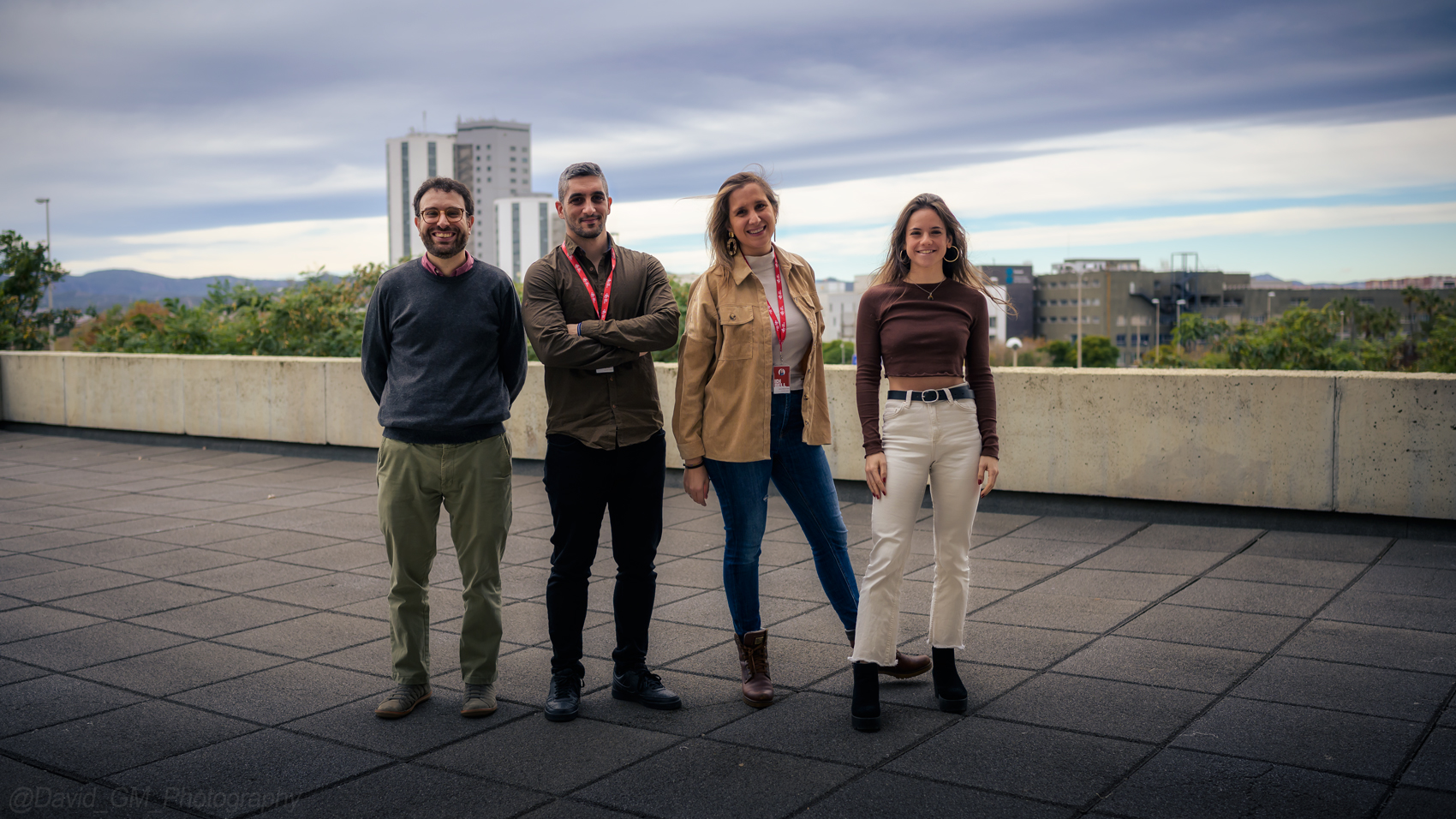
Group members
Group Leader
Lab Manager / Staff Scientist
Technician
Publications
ACS Chem Biol. 2019 Apr 19;14(4):567-578. doi: 10.1021/acschembio.9b00169. Epub 2019 Mar 12. NO ABSTRACT PMID:30860357 | DOI:10.1021/acschembio.9b00169
Nucleic Acids Res. 2019 Jan 8;47(D1):D917-D922. doi: 10.1093/nar/gky1129. ABSTRACT canSAR (http://cansar.icr.ac.uk) is a public, freely available, integrative translational research and drug discovery knowlegebase. canSAR informs researchers to help solve key bottlenecks in cancer translation and drug discovery. It integrates genomic, protein, pharmacological, drug and chemical data with structural biology, protein networks and unique, comprehensive and […]
ACS Omega. 2018 Oct 31;3(10):12707-12712. doi: 10.1021/acsomega.8b02337. Epub 2018 Oct 5. ABSTRACT Recent network and system biology analyses suggest that most complex diseases are regulated by robust and highly interconnected pathways that could be better modulated by small molecules binding to multiple biological targets. These pieces of evidence recently led to devote efforts on identifying […]
Cell Chem Biol. 2018 Feb 15;25(2):194-205.e5. doi: 10.1016/j.chembiol.2017.11.004. Epub 2017 Dec 14. ABSTRACT Chemical probes are essential tools for understanding biological systems and for target validation, yet selecting probes for biomedical research is rarely based on objective assessment of all potential compounds. Here, we describe the Probe Miner: Chemical Probes Objective Assessment resource, capitalizing on […]
Curr Pharm Des. 2016;22(46):6935-6945. doi: 10.2174/1381612822666160923115828. ABSTRACT Over the past decade, a more comprehensive, large-scale approach to studying cancer genetics and biology has revealed the challenges of tumor heterogeneity, adaption, evolution and drug resistance, while systems-based pharmacology and chemical biology strategies have uncovered a much more complex interaction between drugs and the human proteome than […]
Research Projects
Title: Systems Drug Discovery to Tackle Cancer Drug Resistance
Project Number: CP22/00122 (Miguel Servet Fellowship)
PI: Albert Antolin
Source of Support: Instituto de Salud Carlos III (ISCIII)
Project Start and End Date: 07/2023 – 07/2028
Total Award Amount: 240,000€
Title: Systems-based Characterization of Drug Metabolites to Exploit them in Precision Medicine
Project Number: PID2022-136344OA-I00
PI: Albert Antolin
Source of Support: Spanish Ministry of Science and Innovation
Project Start and End Date: 09/2023 – 08/2026
Total Award Amount: 130,000€
Title: Rational design of multi-target KRAS inhibitors that resist resistance
Project Number: N/A (industrial collaboration, non-competitive)
PI: Albert Antolin
Source of Support: VIVAN Therapeutics
Project Start and End Date: 10/2023 – 10/2024
Total Award Amount: 50,000€
Collaborations
Amadeu Llebaria (IQAC-CSIC, Barcelona)
Antonella Consiglio (UB, Barcelona)
Nahuel Villegas (Vivan Therapeutics, London)
Susanne Muller (SGC, Frankfurt)
Paul Workman (ICR, London)
Bissan Al-Lazikani (MDACC, Houston)
Jordi Mestres (Chemotargets, Barcelona)
Marcos Malumbres (VHIO, Barcelona)
Jonathan Baell (Lyterian Therapeutics, San Francisco)
Andrea Califano (Columbia, NYC)

Campus IDIBELL
(L’Hospitalet del Llobregat)
Hospital Duran i Reynals, Gran Via 199,
L’Hospitalet del Llobregat,
Barcelona 08908
Tel. +34 93 260 7952
Campus IGTP-IJC
(Badalona)
Campus Can Ruti – IGTP – Building Muntanya,
Rd. Can Ruti, Camí de les escoles s/n,
Badalona, Barcelona 08916
Tel. +34 93 554 3069
Campus IDIBGI
(Girona)
Parc Hospitalari Martí i Julià de Salt, Dr. Castany s/n,
Salt, Girona 17190
Tel. +34 872 987 087

 Alemany’s & Piulats’s lab